Dog-Friendly Home Design: Creating Canine Comfort Zones

Welcome to Boomer’s Kingdom
Want to know a secret? There’s a rug by our front door that tells the whole truth, “This is Boomer’s House, We Just Live in It.” And honestly, our lovable yellow lab Boomer has absolutely made himself the undisputed king of every single room in our dog-friendly home design!
Here’s something I’ve noticed from talking with fellow dog parents, we all end up redesigning our homes around our four-legged family members. Yet most of us fumble through creating dog-friendly spaces without a real roadmap.
After years of sharing space with Boomer, I’ve discovered that designing truly dog-friendly living spaces isn’t just about accommodating one furry ruler. It’s about creating harmony where both human and canine family members feel genuinely secure and completely at home.
From strategically placed comfort zones to thoughtfully designed rest areas, every design choice can enhance your dog’s daily happiness. This guide shares real-world strategies for creating dog-friendly home environments that honor natural behaviors while maintaining beautiful, functional spaces for the whole family.
For cat parents, see our guide on creating cat sanctuaries at home, and if you’re managing both dogs and cats, our article on multi-pet household harmony provides essential strategies for peaceful coexistence.
What Is Dog-Friendly Home Design?
Dog-friendly home design is the intentional creation of living spaces that accommodate canine behaviors, comfort needs, and safety requirements while maintaining human aesthetics and functionality. Unlike simply allowing dogs in your home, true dog-friendly design considers daily rhythms, temperature preferences, rest requirements, and natural behaviors in every room.
This matters because dogs are den animals who thrive on routine, security, and having designated spaces throughout the home. When we design with these instincts in mind, we reduce anxiety, prevent destructive behaviors, and create environments where dogs feel genuinely comfortable and secure.

Understanding Your Dog’s Daily Rhythms and Dog-Friendly Home Design Basics
Understanding your dog’s daily rhythms and preferences forms the foundation for successful dog-friendly home design that truly serves their physical and emotional needs. The American Kennel Club provides excellent guidance on creating enriching home environments for dogs. When I watch Boomer navigate our home each morning, I see how thoughtful space planning transforms a house into a canine paradise.
Every morning after our walk, Boomer follows me to the home office. He often arrives before I’ve even poured my first cup of coffee! This space has become his command center, thoughtfully designed with dual comfort options. A plush, supportive bed in the corner serves longer rests, plus a washable blanket at my feet for quick meeting naps.
The key lies in creating climate-controlled comfort zones – cool hardwood floors for warm days paired with cozy rugs for chilly mornings.
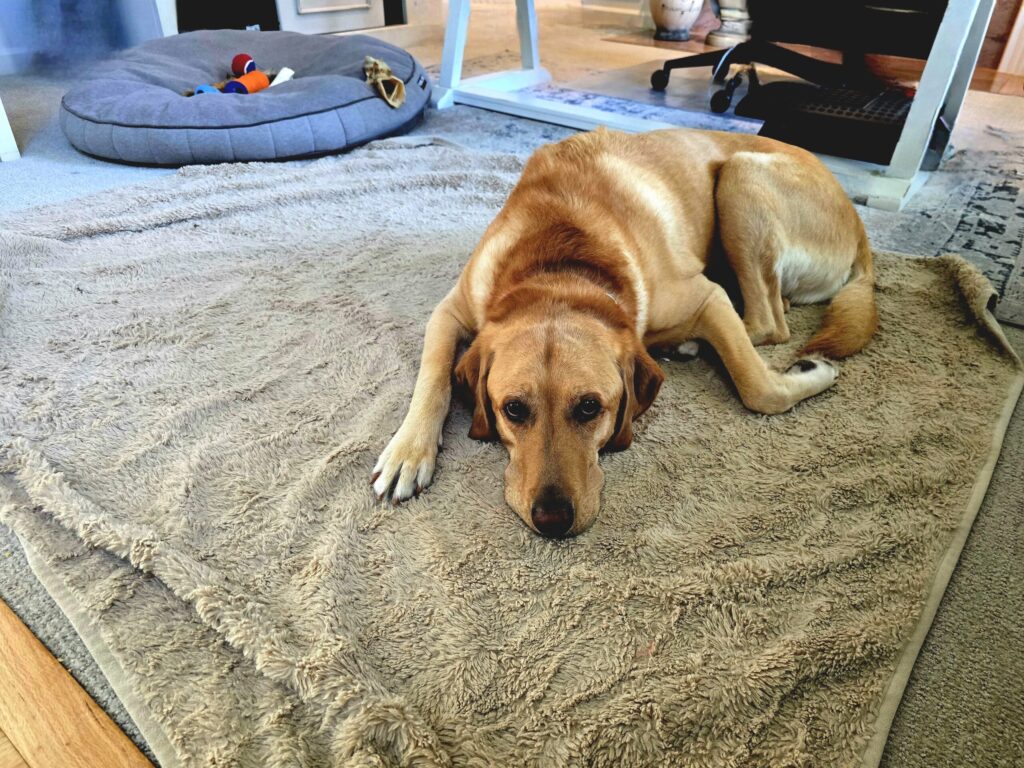
Smart dog-friendly home design involves establishing multiple rest areas throughout your home. Dogs naturally seek different spots based on temperature, activity level, and social needs.
Easy-clean surfaces in high-traffic areas have been game-changers. Washable rugs, wipeable furniture covers, and stain-resistant fabrics maintain both beauty and functionality.
The magic happens when your dog-friendly home design considers appropriate sizing for your dog’s breed and age. Senior dogs need orthopedic support while active younger dogs benefit from durable, chew-resistant options.
Strategic placement near family activity honors dogs’ social nature. They want to be part of household rhythms without being underfoot.
Creating Canine Sleep Sanctuaries with Smart Home Design
Nighttime comfort optimization centers around Boomer’s ultra-plush bed positioned beside our bed. This arrangement offers security through proximity while maintaining everyone’s sleep quality.
Premium comfort materials like memory foam support joint health. Alternative options like his faux sheepskin rug provide flexibility for different moods.
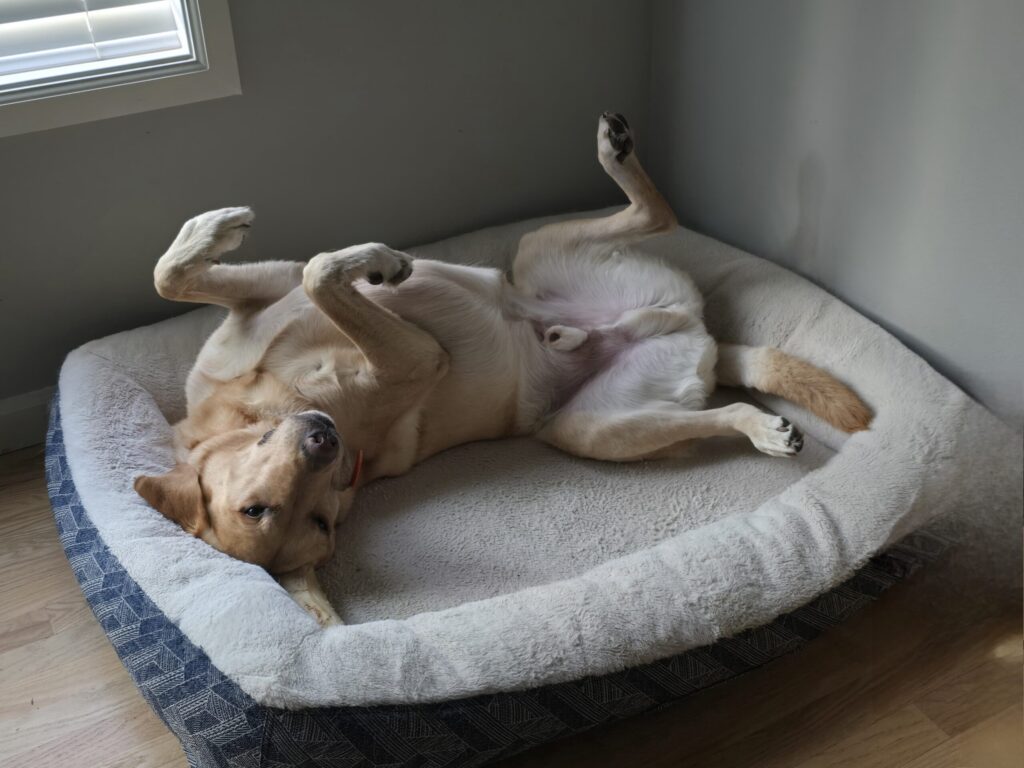
The bedroom setup demonstrates key principles of dog-friendly home design: consistency, comfort, and choice. Boomer knows exactly where his space is, the materials support his physical needs, and he has options for different sleeping preferences. This predictability reduces anxiety and creates positive associations with rest time.
Consider your dog’s sleeping habits when choosing placement and materials. Some dogs prefer cooler surfaces during warm months, while others seek warmth year-round. Providing options allows your dog to self-regulate comfort naturally.
Dog-Proofing Your Home Design for Safety and Peace of Mind
Creating genuinely safe environments requires systematic evaluation of potential hazards specific to canine behavior. Dogs explore the world through their mouths. This makes certain safety considerations essential in dog-friendly home design.
Electrical and Structural Safety
Wire management systems prevent both chewing hazards and tripping accidents. Outlet protection becomes especially important for curious puppies or dogs who investigate through mouthing. Secure appliance positioning ensures that wagging tails don’t knock over items or create dangerous situations.
Furniture stability plays a crucial role in dog-friendly homes. While dogs don’t typically climb like cats, they do lean against furniture, and larger dogs can accidentally topple unstable pieces. Securing tall furniture and ensuring sturdy construction prevents accidents during play or when dogs seek comfort against familiar objects.
Chemical and Food Safety
Latching trash cans prevent access to potentially harmful food scraps and dangerous items. Locked pantries and high cabinet storage for cleaning products prevent accidental poisoning. Dog-proof latches on lower cabinets keep curious noses away from hazardous materials.
Kitchen safety extends to proper food storage and awareness of toxic foods. Chocolate, grapes, onions, and other common household foods can be dangerous for dogs. Secure storage and family education prevent accidental exposure.
Room-by-Room Dog-Friendly Home Design Ideas
Thoughtful room design balances human aesthetics with canine functionality, creating spaces that serve everyone’s needs beautifully. Each room in your dog-friendly home design offers unique opportunities to enhance daily comfort and safety.
Living Areas: The Heart of Family Life
Living areas benefit from durable, attractive furniture covers that protect sofas while maintaining visual appeal. Strategic toy storage in attractive baskets encourages tidiness while keeping entertainment accessible.
Temperature comfort zones throughout the space accommodate changing seasonal needs. Both warm spots for cold days and cool areas for regulation honor your dog’s natural temperature preferences.
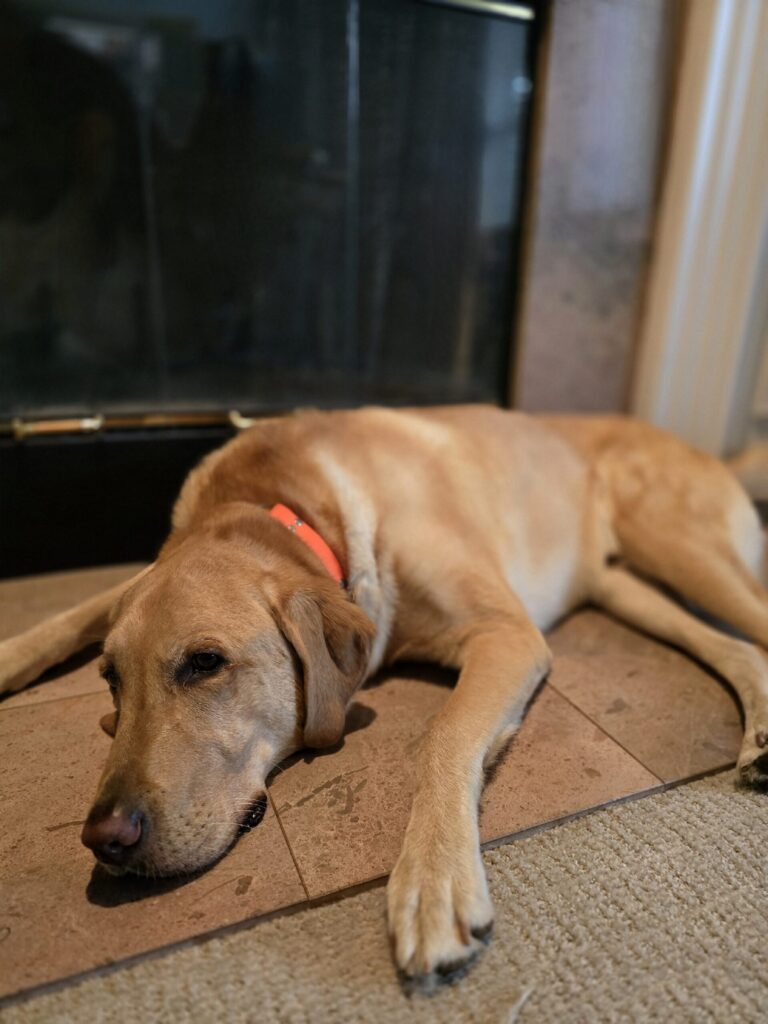
Consider traffic flow when placing dog beds and toys. Areas near family activity satisfy dogs’ social needs without creating obstacles for human movement. Multiple seating options allow dogs to choose proximity levels based on their mood and energy.
Kitchen and Dining Areas: Food Safety First
Kitchen and dining areas require special attention to food safety and easy maintenance. Non-slip feeding mats protect floors while providing stable eating surfaces. Elevated storage keeps human food safely out of reach, while designated feeding stations create clear boundaries and routines.
Comfortable observation spots allow dogs to watch meal preparation without being underfoot. This satisfies their natural curiosity while maintaining kitchen safety and workflow efficiency.
Home Office Spaces: Work-Life Balance
Home office spaces present unique challenges in our work-from-home world. Non-disruptive comfort zones with puzzle toys and long-lasting chews provide mental stimulation during long work sessions without interfering with video calls or productivity. Careful cord management becomes especially important in electronics-heavy environments.
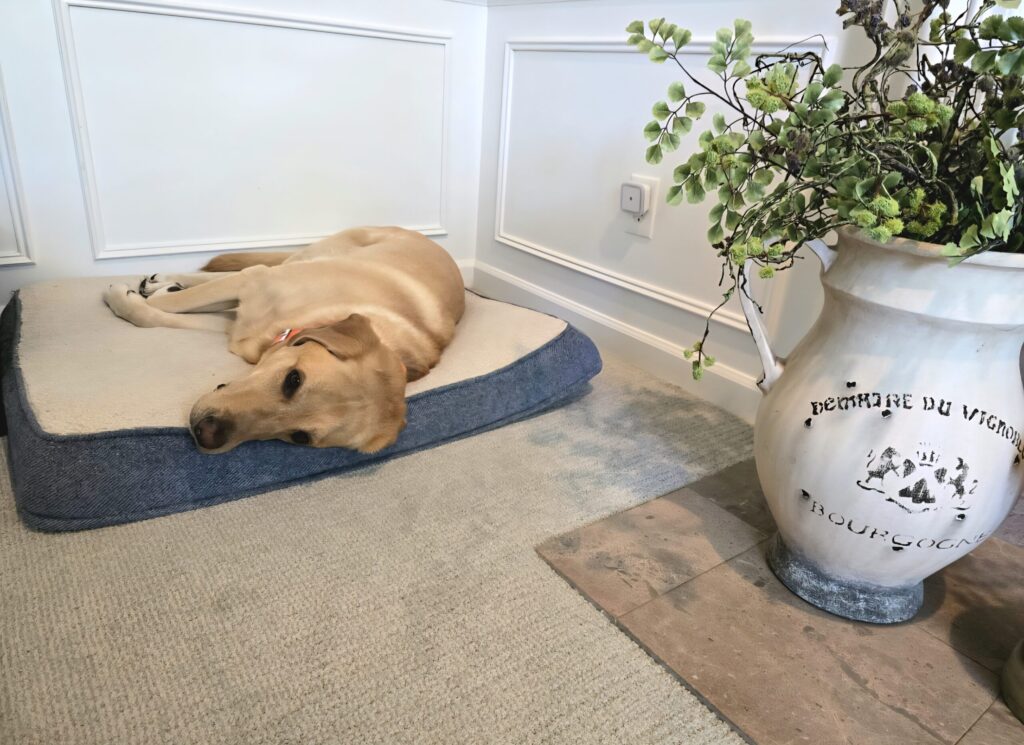
Boomer’s office setup demonstrates how dogs can be wonderful work companions when their needs are considered. His presence provides comfort and companionship while his designated space ensures he doesn’t disrupt professional activities.
Outdoor Access and Garden Spaces
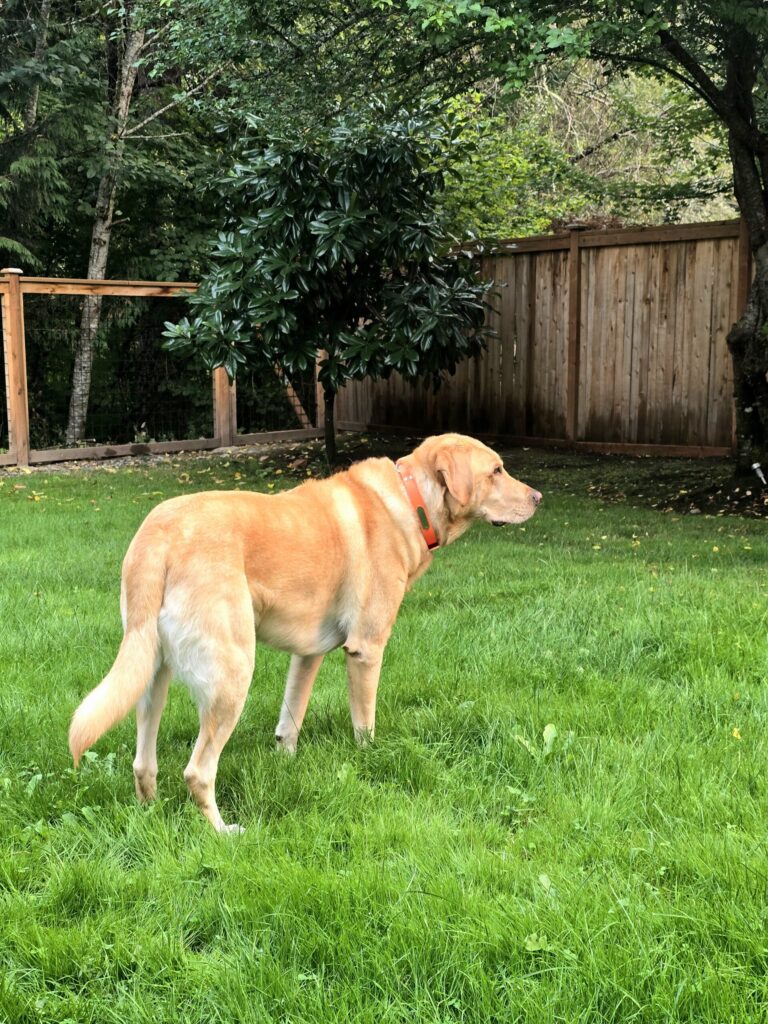
Thoughtfully designed outdoor access extends indoor comfort into nature while maintaining safety and security. Secure garden access through supervised outdoor time or safely fenced areas allows dogs to enjoy fresh air and natural enrichment.
Pet-safe landscaping choices avoid toxic plants and treatments, creating worry-free exploration opportunities. Comfortable observation areas where dogs can watch neighborhood activity provide mental stimulation and sensory enrichment.
Seasonal considerations ensure year-round outdoor enjoyment. Weather protection through covered areas shields dogs from rain or intense sun, while surface variety including grass and hard surfaces accommodates different activities and preferences.
Essential Dog-Friendly Home Checklist
☐ Multiple rest areas in different rooms and temperature zones
☐ Easy-clean surfaces with washable rugs and wipeable covers
☐ Orthopedic support beds for senior dogs, durable options for young dogs
☐ Strategic placement near family activity without blocking pathways
☐ Accessible toy storage in attractive baskets
☐ Consistent nighttime sleeping arrangements for security and routine
☐ Secure electrical cords and protect outlets from curious dogs
☐ Latching trash cans and locked pantries for safety
☐ Non-slip feeding mats and designated eating areas
☐ Safe outdoor access with appropriate fencing or supervision
Boomer's Take

"You know what I love most about my house? Everything has a spot just for me. The office bed where I can hear the keyboard clicks. The sunny patch in the living room for afternoon naps. The cool kitchen floor when I'm feeling warm. And that big bed upstairs where I sleep next to my people every night. Some dogs might want fancy things, but me? I just want to be near my family with a soft place to rest my head. Mission accomplished."
Building Your Perfect Dog-Friendly Home Design
Creating a truly dog-friendly home design isn’t about sacrificing style or functionality. It’s about thoughtfully designing spaces that honor both human needs and your dog’s natural behaviors.
Through our journey with Boomer’s office routine and his various comfort zones throughout our home, I’ve discovered an important principle. Successful dog-friendly home design observes and adapts to individual personalities rather than imposing one-size-fits-all solutions.
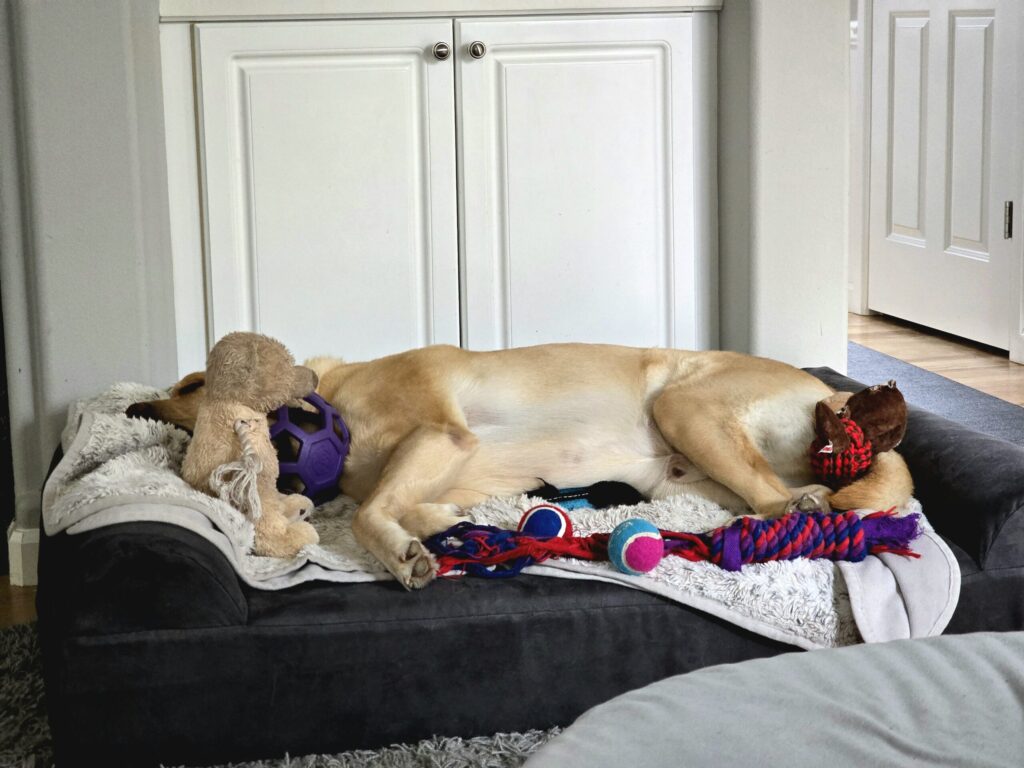
Every dog brings unique rhythms, preferences, and needs to our households. Boomer’s loyal presence in the office, his enthusiastic greetings at the door, and his contented naps in sunny spots all remind us that the most successful homes are built around understanding and accommodating these natural behaviors.
Start with one room and observe how your dog naturally uses the space. Does he seek out sunny spots for naps? Does she prefer to be near family activity? Build from these observations, whether it’s adding a cozy bed where your dog already likes to rest or creating better storage for toys and supplies.
Remember, you’re not just designing a house, you’re creating a haven where every tail wag, contented sigh, and peaceful nap becomes part of the rhythm of home. With thoughtful planning, your dog-friendly design choices can enhance both your dog’s daily happiness and your family’s overall quality of life.
Frequently Asked Questions
What’s the most important element of dog-friendly home design?
Multiple comfortable rest areas positioned throughout your home near family activity. Dogs are social animals who want proximity to their people. Providing designated spaces in each room allows your dog to be part of household rhythms without being underfoot or feeling isolated.
How many dog beds should I have in my home?
At minimum, one bed per main living area (living room, bedroom, home office) plus your dog’s primary sleeping area. Many successful dog-friendly homes have 4-6 beds of varying styles. This allows dogs to choose comfort based on temperature, proximity to family, and mood without competing for resources.
What flooring works best for dog-friendly homes?
Luxury vinyl plank (LVP), tile, and sealed hardwood offer the best balance of durability and easy cleaning. Avoid carpet in high-traffic areas or feeding zones. Use washable area rugs to add warmth and traction while maintaining easy maintenance.
How do I dog-proof my home without making it look like a kennel?
Focus on stylish, functional solutions: attractive storage baskets for toys, furniture covers in complementary colors, and decorative gates that match your decor. Choose dog beds that coordinate with your color scheme. The key is intentional design rather than afterthought additions.
Should my dog sleep in my bedroom?
This depends on personal preference, but many dogs benefit from sleeping near their people. Proximity reduces anxiety and strengthens bonds. If your dog disrupts your sleep, try positioning their bed nearby but not directly next to yours, or use a crate in the bedroom for structure.
What safety hazards do people most often overlook in dog-friendly homes?
Electrical cords behind furniture, toxic houseplants, unsecured trash cans, and household cleaners in low cabinets. Also commonly missed: medications left on nightstands, small objects that become choking hazards, and human foods (especially chocolate, grapes, and xylitol) within reach.
Ready to create complete home harmony for all your pets? Explore our guides on cat sanctuaries at home and multi-pet household harmony for comprehensive strategies that work across species.
At Joyfolk Pets, we believe wellness begins in the everyday moments we share with our animals.
Rooted in Nature. Made with Heart.