A Ritual of Care: 5 Daily Routines That Strengthen the Bond With Your Pet

The Quiet Power of Daily Rhythm
Our days are shaped by small, familiar rhythms. Morning light through the window. A walk before the world fully wakes up. The quiet signal that it’s time to wind down at night. Daily routines with your pet quietly create structure and comfort, shaping how safe, calm, and connected they feel in your home.
For our pets, they matter even more than we realize.
Dogs and cats experience the world through pattern and rhythm. When the day unfolds in ways they’ve come to expect, they feel safer. Less on edge. More settled in their environment. With repetition, those familiar rhythms become a form of trust. They tell our pets their needs will be met and that connection is coming.
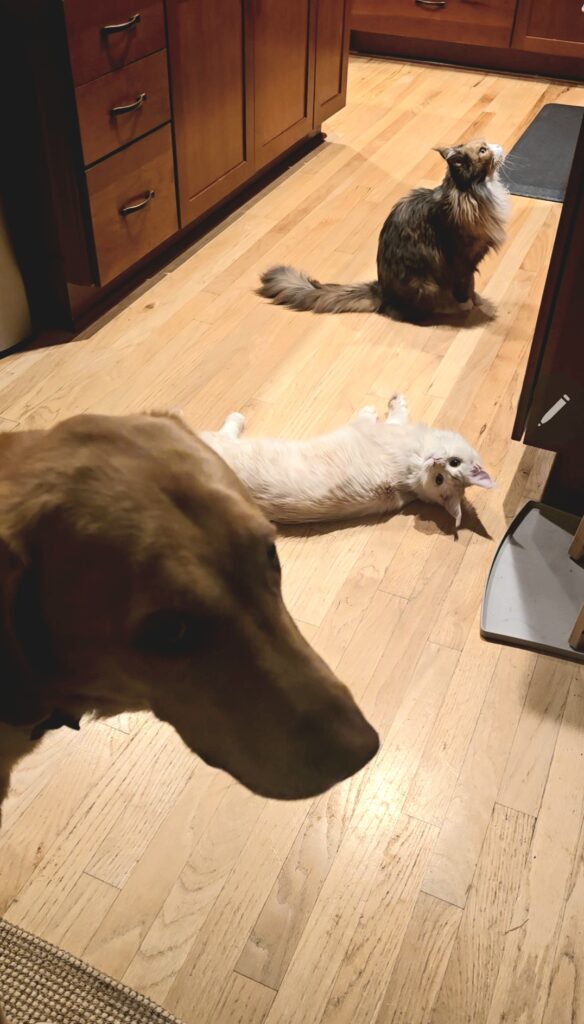
In our home, these routines are simple but deeply ingrained. Morning walks with Boomer before coffee. Penelope greeting me at the stairs as the day begins. Luna drifting in and out of the office, checking in, settling close, then moving on. And every night, without fail, the bedtime ritual all three of them anticipate with impressive accuracy and very little patience if I am late.
None of this happened overnight. These rhythms were built slowly, shaped by different seasons of life, including years when I worked outside the home and more recent seasons working from home. What stayed consistent was the intention. Creating days that felt steady for my pets, even when my own schedule was demanding.
In this post, I’m sharing five daily routines that have helped strengthen the bond between me and my animals. They are not rigid schedules or perfect systems. They are simple, repeatable moments that support emotional well-being, reduce stress, and create a calmer household for everyone involved — pets and humans alike.
The Daily Rituals That Shape a Calm, Connected Life With Your Pet

1. Morning Movement: Starting the Day Together
The way a day begins matters deeply to animals.
Mornings shape how pets experience the rest of the day. Consistent early-day routines help regulate circadian rhythms, support digestion, and reduce anxiety by providing immediate clarity about what the day will hold. When pets know what the morning holds, they’re less likely to carry tension forward.
For dogs, morning movement offers more than exercise. It releases overnight energy, supports joint and muscle health, and provides essential mental stimulation through scent, sound, and environment. For cats, even brief morning interactions serve as a social check-in, reinforcing connection after the long overnight stretch.
In our home, mornings begin with movement and presence. Before coffee, before emails, Boomer and I head out for a walk. Rain or shine, it’s a ritual we both rely on. He waits by the door, already attuned to the routine. These walks give him the stimulation he needs to feel settled later in the day, and they give me space to breathe, observe, and ground myself before responsibilities begin.
Penelope greets me at the stairs each morning, her own quiet ritual of connection. She doesn’t need to join us outside to feel included. That brief, quiet exchange is enough to signal safety and belonging.
What matters most here isn’t distance walked or time spent. It’s the message the routine sends. The day begins calmly. Connection comes first. Needs will be met.
With repetition, this kind of morning rhythm builds trust and emotional security. It teaches pets that the world begins in a way they understand, which makes everything that follows easier to navigate.
2. Feeding Routines: Nourishment as a Bond
Feeding is one of the most powerful points of connection we have with our pets, not because of what’s in the bowl, but because of how and when nourishment is offered. Over time, it becomes one of the most grounding daily routines with your pet.
Regular feeding times support digestion, metabolism, and steady energy levels throughout the day. They also reduce anxiety and food-related stress by creating clear expectations. When pets know meals are coming, they don’t need to stay on high alert. Their bodies and minds can relax into the flow of the day.
In multi-pet homes especially, feeding routines help establish order and reduce tension. That consistency removes the guesswork and competition that can arise when food feels uncertain.
In our home, feeding follows a familiar sequence everyone recognizes. After our morning walk, it’s time for breakfast. There’s no rushing, no chaos. Each bowl is prepared with intention and tailored to individual needs. Penelope receives soft, nourishing food with added hydration and dental support. Boomer’s bowl may include seasonal toppers or supplements that support his broader wellness. Luna knows exactly when it’s her turn and makes her presence known, always eager and engaged.
This process is as much about presence as it is about nutrition. Preparing meals thoughtfully, offering them calmly, and honoring each pet’s unique needs turns feeding into a daily act of care rather than a transactional task.
Over time, these moments build trust. Pets learn that nourishment arrives reliably, that their needs are seen, and that the space around food is calm and safe. That emotional security carries into other parts of the day, supporting calmer behavior, improved focus, and a deeper sense of connection.
If you’re interested in building a more intentional feeding rhythm, you may find these guides helpful:
- How to Build a Balanced Dog Bowl With Real Food Toppers
- Shelf-Stable Cat Feeding: A Gentle Pantry Plan for Feline Wellness
3. Workday Connection: Staying Emotionally Connected During the Day

Pets don’t need constant attention to feel secure. What they need is reliable access to comfort, calm, and connection.
Animals regulate themselves through closeness and repeated patterns, especially when daily routines with your pet remain familiar. Knowing where you are, when connection is likely, and how the day typically unfolds helps reduce uncertainty. That sense of emotional availability matters whether you’re physically present all day or away for work.
When you work from home, this often shows up as quiet companionship rather than active engagement. Boomer rotates between several comfort zones in my office throughout the day, choosing his spot based on temperature, light, and mood. Toys are nearby. Treats are within reach. Luna is much more active during the day and often joins me during calls, settling in my lap or curling up close. Penelope, who prefers her own daytime rhythm, reliably checks in between four and five in the afternoon. If I’m still working, she’ll lie beside me or curl up in Boomer’s bed, her quiet way of reconnecting before the evening begins.
These moments are small, but they’re meaningful. They reinforce shared space without pressure. Pets learn that presence doesn’t always mean stimulation. Sometimes it simply means safety.
Not every pet parent works from home, and I’ve lived both realities. For years, I worked outside the house full-time. Even more recently, I spent a stretch commuting several days a week. In those seasons, morning and evening rituals carried more weight. A consistent goodbye, reliable feeding times, and intentional reconnection at night helped maintain emotional connection even when we were apart during the day.
Some dogs thrive with dog walkers or daycare. Others, like Boomer, do better with quieter routines and known spaces. There’s no universal solution. What matters is recognizing your pet’s needs and building a system that supports them, rather than forcing a setup that looks good on paper but doesn’t feel right in practice.
Workday connection isn’t about being available every minute. It’s about creating an emotional rhythm your pet can trust, whether you’re home all day or returning at night.
4. Evening Wind-Down: Reconnection, Play, and Rest

Evenings are one of the most important transition points in a pet’s day. This is when animals shift from alertness and stimulation into rest. Without a clear wind-down period, that transition can feel abrupt or incomplete, especially for pets who are sensitive, high-energy, or living in busy households.
Gentle evening rituals help your pet release the day. They signal that active hours are ending and that it’s time to settle. This can reduce nighttime restlessness, pacing, vocalizing, or difficulty sleeping.
In our home, evenings are flexible but steady. Some nights include another walk or outdoor play. Other nights are quieter, with indoor games, light interaction, or simply being together in the living room cuddled on the couch. The activity itself matters less than the consistency of reconnection. This is the time when we intentionally come back together after the day’s responsibilities.
These moments are especially important for pets who spend part of the day alone. Evening connection reassures them that separation has an ending, and that closeness is part of the daily flow. With repetition, pets begin to anticipate this reconnection, which helps them stay regulated during the hours leading up to it.
As the house settles, the environment shifts too. Lights soften. Voices quiet. One last potty break signals that the day is closing. These layered cues work together to guide pets toward rest, making the transition into nighttime calmer and more predictable.
Evening wind-down is one of the most stabilizing daily routines with your pet. It’s about creating space for calm, connection, and emotional closure before sleep.
5. Bedtime Rituals: Snacks, Snuggles, and Security
Bedtime is more than the end of the day. For pets, it’s a moment of emotional closure.
Consistent nighttime routines help animals fully relax at the end of the day. Clear cues that the day is ending signal safety, reduce vigilance, and support deeper, more restful sleep. When bedtime follows a familiar sequence, pets don’t have to wonder what comes next.
In our home, this ritual is unmistakable.
After Boomer’s final potty break, everyone knows exactly what time it is. The cats come down early, already circling, watching, waiting. If I’m even a few minutes late, they make their expectations very clear. The routine matters to them because it’s dependable, and because it marks the final moment of connection for the day.
Each pet receives their favorite dental treat. It’s not just a snack. It’s a shared signal that the day has been completed together. After that, everyone settles into their chosen sleeping spaces. Boomer heads to his bed beside mine. Luna curls up in London’s room. Penelope gets her quiet evening affection before retreating to her preferred cozy spot.
What makes this ritual powerful isn’t the treat itself. It’s the sequence. The consistency. The reassurance that nothing else is expected of them tonight.
These moments help pets release the day. They reduce nighttime restlessness and anxiety, especially in multi-pet homes where subtle tension can linger if routines aren’t clear. Over time, bedtime rituals teach pets that the household is calm, stable, and safe through the night.
Security doesn’t come from constant interaction. It comes from knowing the day will always end in the same gentle way. Predictable bedtime cues are essential daily routines with your pet, anchoring the end of the day in safety.
Why Consistency Matters in Daily Routines with Your Pet
Consistency is the thread that holds all of these routines together.
Routines help regulate a pet’s nervous system. When dogs and cats can reliably anticipate what comes next, their bodies stay out of a constant state of alert. Stress hormones lower. Digestion improves. Sleep deepens. Over time, this sense of safety shapes behavior in subtle but powerful ways.
What matters most is not perfection, but reliability.
In our home, the anchors stay steady even when life shifts. Feeding times remain steady. Mornings still begin with movement and connection. Evenings still close with expected rituals. Weekends may bring longer adventures or a change in pace, but the core rhythms remain intact. Those anchors create emotional continuity, which is especially important in a multi-pet household.
This is also why our home stays calm across species. Dogs and cats don’t need identical routines, but they do benefit from shared signals of safety. When the environment follows a steady rhythm, there’s less competition, less uncertainty, and more ease. Each pet learns when connection is coming and where they fit within the flow of the day.
That stability is also what allows Luna to move between environments and return home from college (Bringing Your Cat to College: A Complete Guide to Emotional Support Animal Transitions) with minimal disruption. She isn’t relying on novelty or constant reassurance. She’s relying on structure she knows. The same rhythms greet her when she comes back, and that familiarity does the regulating work for all of us.
Consistency doesn’t mean rigidity. It means showing up in the same essential ways, day after day, so your pet doesn’t have to guess what comes next. Over time, those steady moments become the foundation of trust, adaptability, and emotional resilience.
If you’re navigating life with more than one pet, you may also find support in Multi-Pet Household Harmony: Managing Dogs and Cats Together, where shared routines and environmental design play a key role in peaceful coexistence.
Boomer, Luna, and Penelope’s Take

Boomer, "Morning walks tell me the day is starting the right way. I get to move, sniff, and settle before the world asks anything of me. Nights end best when I know exactly where I’ll sleep and that everything is in its place."

Penelope, "I like knowing when connection is coming. I don’t need constant attention, but I do need consistency. Checking in at the end of the day and ending the night calmly helps me feel secure in the flow of the house."

Luna, "Even when I leave and come back, the rhythm stays the same. That makes it easy to adjust. Familiar routines help me land quickly and feel at home wherever I am."
Where Routine Becomes Relationship

When we talk about routines, it’s easy to think in terms of schedules and structure. But what pets experience is something deeper. Over time, daily routines with your pet become the foundation of emotional safety and trust.
They experience reliability.
Each time you show up at the same moment. Each time a familiar pattern unfolds. Each time the day begins and ends in ways they recognize. Those repetitions become a language of safety. With repetition, they teach your pet that the world is predictable, that connection is coming, and that they don’t have to stay on alert to feel secure.
This is how relationships are built with animals. Not through constant interaction or perfect days, but through small, steady acts of care repeated again and again.
In our home, these rituals are what allow three very different animals to coexist calmly. They’re what make transitions smoother, absences easier, and reunions gentler. They’re why Luna can leave and return without disruption, why Boomer settles easily into the rhythm of the day, and why Penelope knows exactly when it’s time to reconnect.
What often surprises people is that these routines don’t just support our pets. They support us, too. Moving my body each morning, stepping outside before the day begins, and closing the evening with rituals has become a form of nervous system care for me as well. In a high-stress role with a full life of responsibilities, these rhythms help me slow down, regulate my own stress, and stay grounded. The same reliability that calms our pets also calms us. When we build routines rooted in care, the benefit flows both ways—strengthening the bond not just between animals, but between the life we’re building and the people living it.
None of this comes from doing more. It comes from doing the same few things with intention.
If you’re feeling overwhelmed, start small. Choose one ritual. Protect it. Let it become familiar. Then build from there. With time, those moments will begin to hold the day together in ways you can feel, even when life is busy or imperfect.
Because when daily routines with your pet are rooted in care, they become more than habit.
It becomes relationship.
Frequently Asked Questions
Why are daily routines so important for dogs and cats?
Daily routines with your pets provide consistency, which helps regulate a pet’s nervous system. When dogs and cats know what to expect, they experience less stress and uncertainty. Over time, this predictability supports emotional stability, better sleep, healthier digestion, and calmer behavior. Routines become a quiet form of communication that tells your pet they are safe and cared for.
How strict do pet routines need to be?
Routines do not need to be rigid to be effective. What matters most is reliability, not perfection. Feeding around the same time each day, closing the evening with a familiar ritual, or starting mornings in a consistent way gives pets the structure they need while still allowing flexibility for real life. A routine that bends occasionally is far better than one that breaks completely.
Can routines really help anxious or sensitive pets?
Yes. Predictable daily rhythms are one of the most effective ways to support anxious pets. When routines are consistent, pets spend less energy anticipating change and more time feeling settled. This can reduce pacing, vocalizing, reactivity, and nighttime restlessness. Over time, routines help anxious pets build emotional resilience and confidence.
What if I work outside the home or have an unpredictable schedule?
Even if your schedule changes, anchor routines can still provide stability. Consistent feeding times, a familiar morning goodbye, and intentional evening reconnection help maintain emotional continuity for your pet. Many pets adapt well to changing days as long as the core rhythms of connection remain intact.
Do routines matter in multi-pet households?
Absolutely. In homes with multiple pets, shared routines reduce tension and uncertainty. Predictable schedules help animals understand when connection, food, rest, and attention are coming, which minimizes competition and stress. While individual pets may have different needs, shared environmental rhythms create a calmer household overall.
Can routines help pets adjust to transitions or changes?
Yes. Routines are especially important during periods of change, such as moving homes, adding a new pet, traveling, or returning after time away. Familiar patterns act as emotional anchors, helping pets recognize that while circumstances may change, their core sense of safety remains the same.
Is it ever too late to start building routines with an adult pet?
It’s never too late. Adult pets can benefit from routine just as much as younger ones. Even introducing one consistent daily ritual can begin to shift behavior and emotional state over time. Pets are remarkably adaptable when given clear, gentle structure.
What’s the best way to start if everything feels overwhelming?
Start small. Choose one routine that feels manageable, such as a consistent bedtime ritual or a calm morning check-in. Protect that moment and let it become familiar before adding anything else. Sustainable routines grow slowly, and even small, steady habits can make a meaningful difference.
At Joyfolk Pets, we believe wellness begins in the everyday moments we share with our animals.
Rooted in nature. Made with heart.