Bringing Your Cat to College: How to Know If They’re Actually Adjusting

When the Move Is Over but the Work Is Not
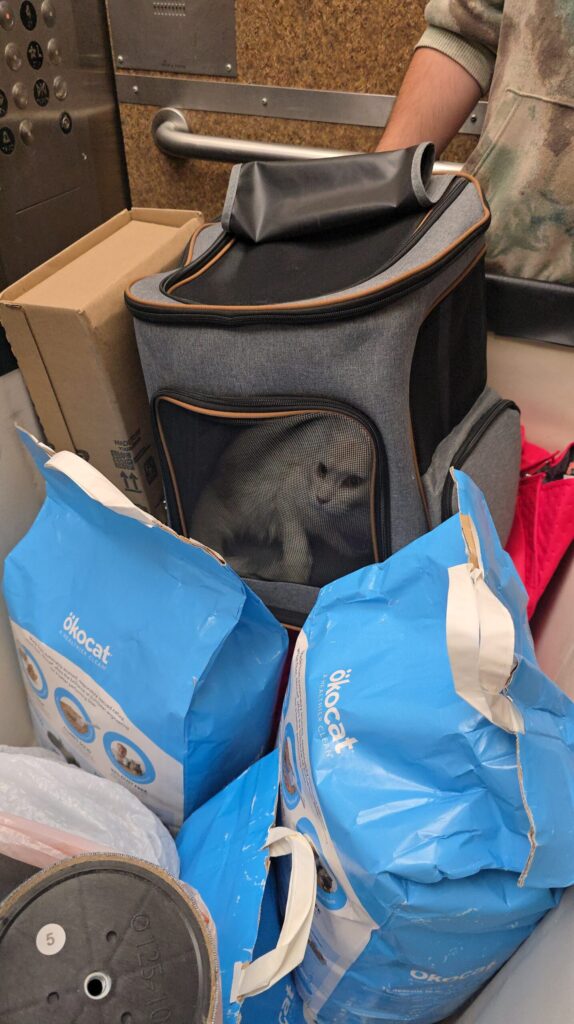
When my son left early for Resident Advisor training, we made a deliberate choice to wait before bringing his cat Luna to college. His first weeks were long and demanding, and we didn’t want her alone in a brand-new space while he was gone most of the day. A couple of weeks later, once he was settled, I packed my car and drove four and a half hours with Luna to help her transition.
This stage of bringing your cat to college is less about logistics and more about learning how to evaluate whether the adjustment is actually working. If you’re still preparing for the move itself, you can start with Bringing Your Cat to College: A Complete Guide to Emotional Support Animal Transitions, which covers approvals, dorm setup, and initial planning.
The move itself was only the beginning.
What followed was the real work of adjustment. A small room. New sounds. Long stretches of alone time for the first time in her life. A different feeding rhythm. New rules about where she could and could not go.
This stage is where many pet parents feel uncertain. The logistics are done. The dorm is set up. The approvals are in place. And yet the question lingers quietly in the background.
Is my cat actually okay here?
This post is about answering that question honestly. Not through perfection or panic, but through observation, adjustment, and understanding how cats experience change.
Cats Adjust in Layers, Not All at Once
Cats do not adjust all at once. They settle in layers.
Some signs come quickly. Others take weeks or months to emerge. And some behaviors that look like “failure” at first are simply part of the nervous system recalibrating to a new environment.
Luna’s experience made this clear. She explored confidently. She bonded closely with my son. She played, climbed, and slept near him. At the same time, she struggled with being left alone. She vocalized loudly when he left. She sometimes refused to finish meals until he returned. She tested doors. She tried to escape.
None of that meant failure. It meant her nervous system was recalibrating.
The goal is not silence or compliance. The goal is regulation.
What Adjustment Looks Like When Bringing a Cat to College
Instead of asking whether your cat seems happy all the time, it’s more helpful to look at consistent markers that reveal how their nervous system is responding to the new environment.
Eating Patterns
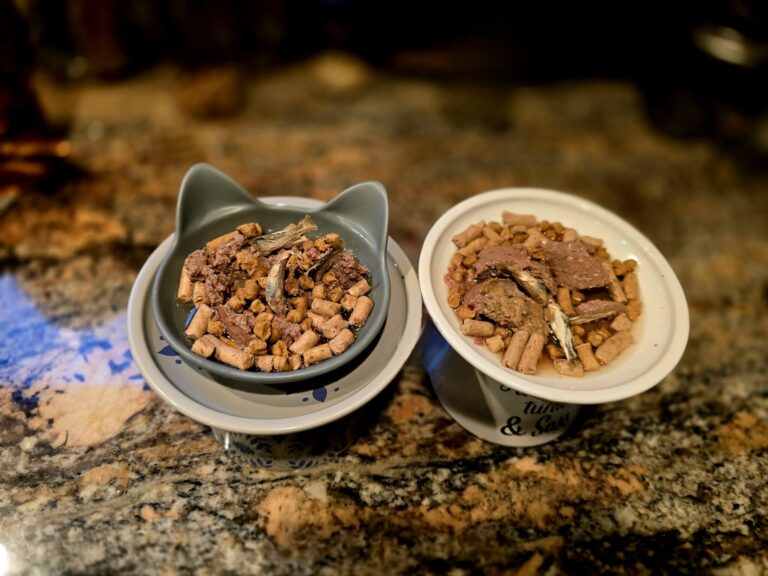
Stress often shows up at the food bowl first. Some cats eat less. Others wait to eat until their person returns. Some become more selective about what they’ll accept.
Luna did all three.
What mattered was not that her appetite changed, but that it stabilized over time. When she came home for the holidays, she had grown noticeably and ate well, which told us that despite the stress signals, her body was still receiving what it needed. Her system was working even when her behavior suggested otherwise.
If eating issues persist or worsen over time, especially if your cat is losing weight, that’s when you pause and reassess. But temporary shifts in eating patterns during the first few weeks don’t automatically signal failure.
Sleep and Rest
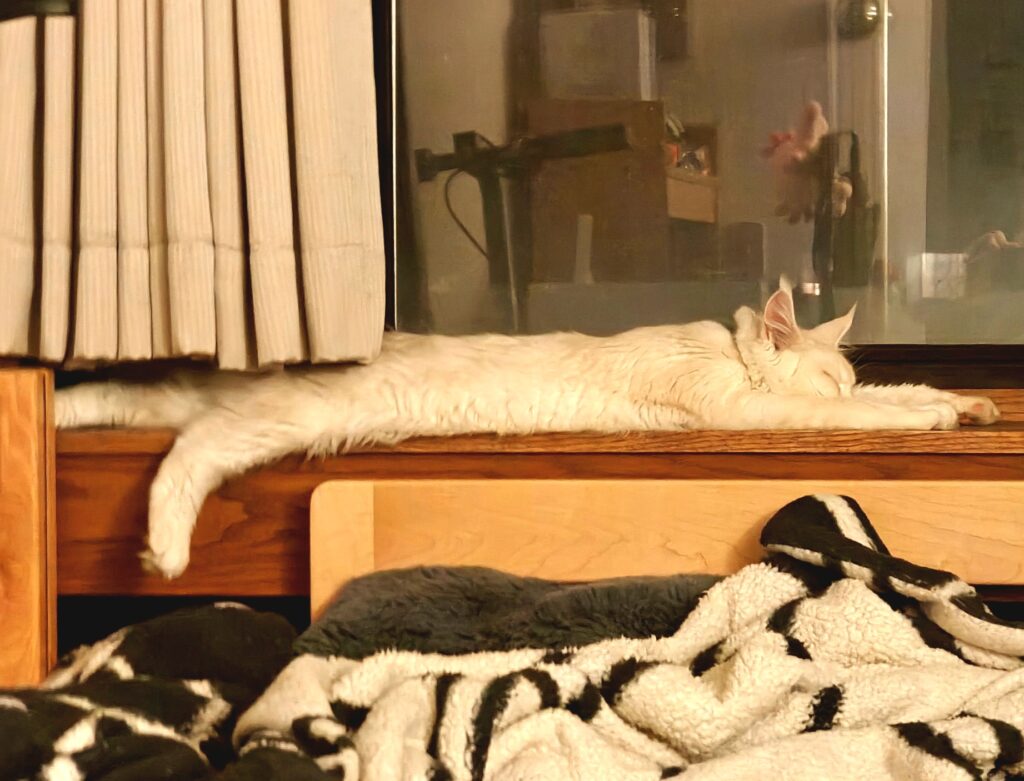
An adjusting cat will sleep. Not constantly, but deeply. Rest is one of the clearest signs that the nervous system feels safe enough to power down.
Even in a small dorm room, Luna established preferred sleeping spots and predictable rest periods. That mattered more than where those spots were or how many she cycled through. The ability to rest deeply tells you something critical about felt safety.
Engagement and Curiosity
A regulated cat still explores, plays, and interacts. Stress does not eliminate curiosity. It narrows it.
Leash walks, supervised outdoor time, and interactive play became essential outlets for Luna. These moments gave her space beyond the room and helped her release pent-up energy in a controlled way. They also gave us a window into her baseline temperament, which helped us distinguish between stress responses and normal personality.
Recovery After Separation
Some distress when left alone is expected, especially for social breeds like Maine Coons and for cats who have never been truly alone before.
The question is not whether your cat protests when you leave. It’s whether they recover when you return.
Does your cat re-engage after you’ve been gone? Do they eat, play, and settle afterward? Recovery tells you more than the initial reaction. A cat who vocalizes at departure but greets you warmly, eats their delayed meal, and resumes normal activity is demonstrating resilience. A cat who stays withdrawn hours after your return is showing you something different.
Is Your Cat Actually Adjusting? A Practical Check-In
Adjustment is rarely obvious in the moment. Instead of focusing on one behavior in isolation, look at patterns over time.
Use this checklist as a way to assess how your cat is really doing.
Managing Alone Time in a Small Space
Unlike service animals, emotional support animals in college settings face unique constraints. They cannot attend class. They cannot roam common areas. They must stay in the room during absences.
In Luna’s case, that meant building tolerance for being alone rather than eliminating alone time entirely.
We adjusted gradually. Timing meals so she felt secure before departures. Leaving familiar scents on clothing or bedding. Creating vertical space so she could observe from different vantage points rather than feel confined to the floor. Accepting that vocalization would happen while still reinforcing predictable returns.
This is not about ignoring distress. It’s about teaching safety through consistency. Cats learn that departures are temporary when the pattern proves reliable. Patterns matter more than single moments.
Predictable rhythms around feeding, departures, play, and rest give cats a framework for safety. I explore this more deeply in A Ritual of Care: 5 Daily Routines That Strengthen the Bond With Your Pet, where daily consistency becomes a stabilizing force during transitions.
Feeding as Regulation, Not Control
We designed Luna’s diet before college so it could remain consistent across environments. Shelf-stable, high-quality canned food, freeze-dried options, and familiar toppers made it possible to maintain continuity despite limited fridge space — an approach I outline in Bringing Your Cat to College: A Complete Guide to Emotional Support Animal Transitions.
Even so, we had to adjust.
She stopped eating some foods entirely. Others she ate only when my son was present. Rather than forcing variety or worrying about perfect nutrition immediately, we prioritized intake. Once she felt more settled, we slowly reintroduced foods she had rejected earlier. Many came back into rotation without issue.
Eating is emotional for cats. Stability often has to come before optimization. A cat who feels safe will eventually eat a wider range of foods than a cat who feels pressured.
Space Planning and Environmental Support
Small spaces magnify everything. Smells linger. Sounds echo. Movement feels more intrusive. Stress compounds.
We focused on function over aesthetics. A tall cat tree to create vertical territory and the ability to retreat upward. Defined zones for rest, play, and feeding so each activity had its own space. An air purifier to keep the environment fresh without overwhelming her sensitive respiratory system. Natural odor control to reduce sensory overload in a confined room.
Some solutions worked. Others did not.
Litter liners were a failure. Luna shredded them immediately, turning them into a new kind of mess rather than a solution. Stainless steel litter boxes still required hands-on maintenance despite promises of easier cleaning. That was a reality check, not a mistake.
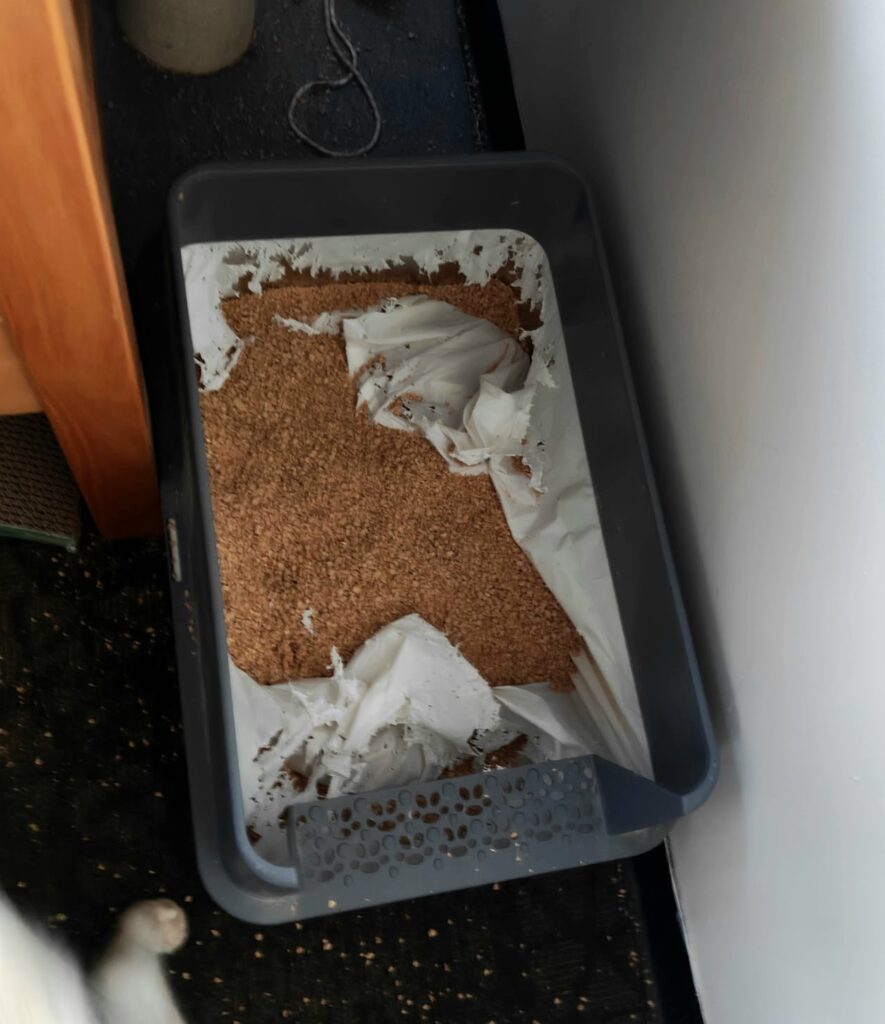
Adaptation is part of responsible care. If you’re still in the setup phase, I walk through dorm-specific space planning, supply choices, and safety considerations in Bringing Your Cat to College: A Complete Guide to Emotional Support Animal Transitions.
Safety and Door Protocols in Shared Buildings
Dorm life introduces risks that don’t exist in private homes. Shared bathrooms, custodial access, and frequent door openings increase the chance of accidental escapes.
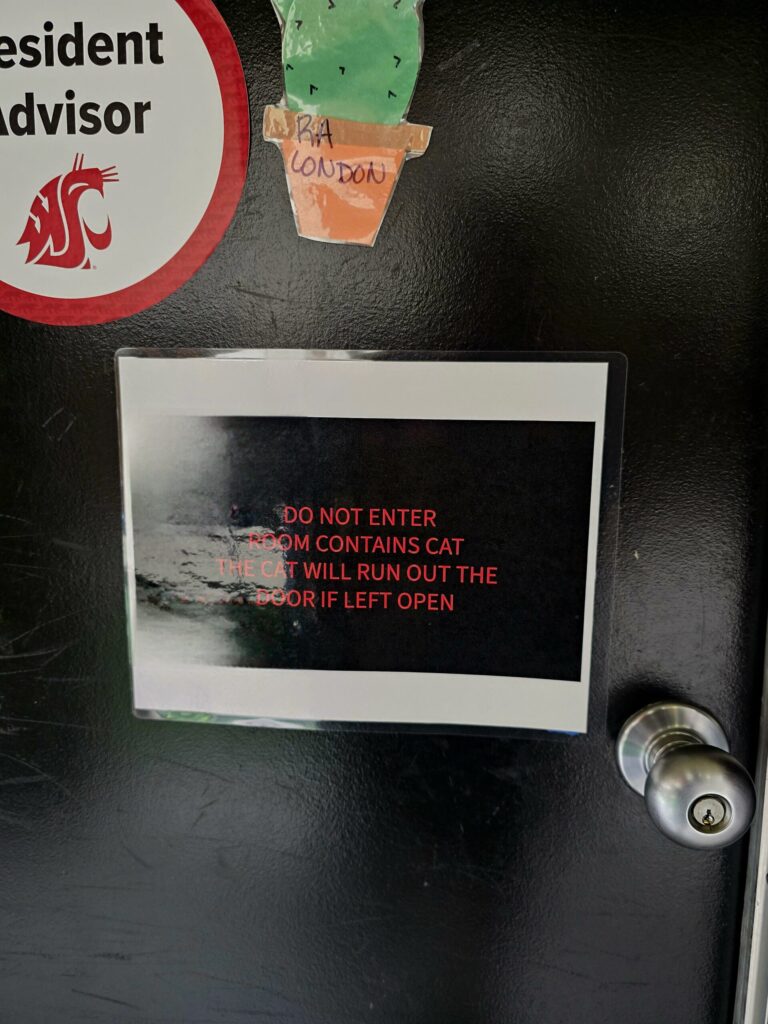
Because Luna’s room shares a bathroom and receives routine custodial entry, we put clear signage on the door indicating that a cat was inside and that doors should not be left open. My son also registered her presence with the custodial team, so they knew to avoid entering when possible.
Even with precautions, Luna attempted to rush the door and escaped more than once. That required gentle, consistent training and heightened awareness during every entry and exit.
Safety in a dorm environment isn’t just about setup. It’s about anticipating human behavior and building systems that protect your cat when you’re not the one opening the door.
Unexpected Challenges Are Part of the Story
Luna went into heat earlier than planned. We had hoped to handle her spay during the Thanksgiving school break when she’d be home with easier access to our regular vet. Instead, my son navigated finding a local vet, scheduling surgery, transporting her safely, and managing post-operative care entirely on his own.
It was not ideal timing.
It was also proof that with support, planning, and communication, unexpected challenges can be managed without crisis. He had the information he needed. He knew what questions to ask. He understood what normal recovery looked like versus what required a call.
When Adjustment Requires Re-Evaluation
Adjustment does not mean forcing a situation to work at all costs.
Red flags include ongoing weight loss that doesn’t stabilize, escalating anxiety that worsens rather than improves, unusual spraying or elimination issues, progressive withdrawal from interaction, persistent refusal to eat even preferred foods, or behavioral deterioration that does not improve with time and thoughtful support.
The standard is not perfection. It is progress.
In our case, seeing Luna return home Thanksgiving break calm, larger (she grew quite a bit), and confident gave me peace. It told me that the adjustments we made were enough. She wasn’t just surviving. She was regulated.
What This Transition Taught Us

Bringing a cat to college is not a single decision. It’s a series of evaluations, each one informed by observation and honesty.
It requires flexibility and a willingness to adapt without panic. It also requires recognizing that stress and thriving can coexist during periods of significant change. A cat can vocalize at departures and still be adjusting well. They can refuse certain foods and still be getting adequate nutrition. They can test boundaries and still be bonding deeply.
Luna is doing her job. She supports my son emotionally. She anchors his routine. She gives him comfort in a time of transition.
And we continue to monitor, adjust, and reassess as needed.
That’s not uncertainty. That’s responsible care.
If you are considering this transition, or already living it, know this: success is not quiet or perfect. It’s responsive, steady, and grounded in observation.
That is how adjustment becomes stability.
Questions Pet Parents Ask About Bringing a Cat to College
How long does it take for a cat to adjust to college housing?
Most cats need several weeks to begin settling, with full adjustment often taking a few months. Vocalization, appetite changes, and restlessness can be part of the process.
Is it normal for a cat to cry when left alone in a dorm?
Yes. Especially for social breeds or cats that have never been alone. What matters is whether the distress decreases over time and whether the cat recovers when their person returns.
How do I know if my cat is not adjusting well?
Ongoing weight loss, refusal to eat, escalating anxiety, withdrawal, or worsening behavior over time are signs that the situation needs to be reevaluated.
Can emotional support cats stay alone in dorm rooms?
Yes, but they cannot attend class or common areas. Preparing your cat for alone time and building tolerance gradually is essential.
Should I change my cat’s food during the transition?
Stability matters more than variety. Maintaining familiar foods first and adjusting slowly once your cat feels secure tends to work best.
At Joyfolk Pets, we believe wellness begins in the everyday moments we share with our animals.
Rooted in nature. Made with heart.