Hiking With Dogs Safely: Trail Risks, Wildlife Awareness, and Essential Tips
Hiking with a dog can be one of the best ways to spend time together. Something about stepping onto a trail slows the world down. Dogs notice every scent and sound. We notice things we might otherwise miss.
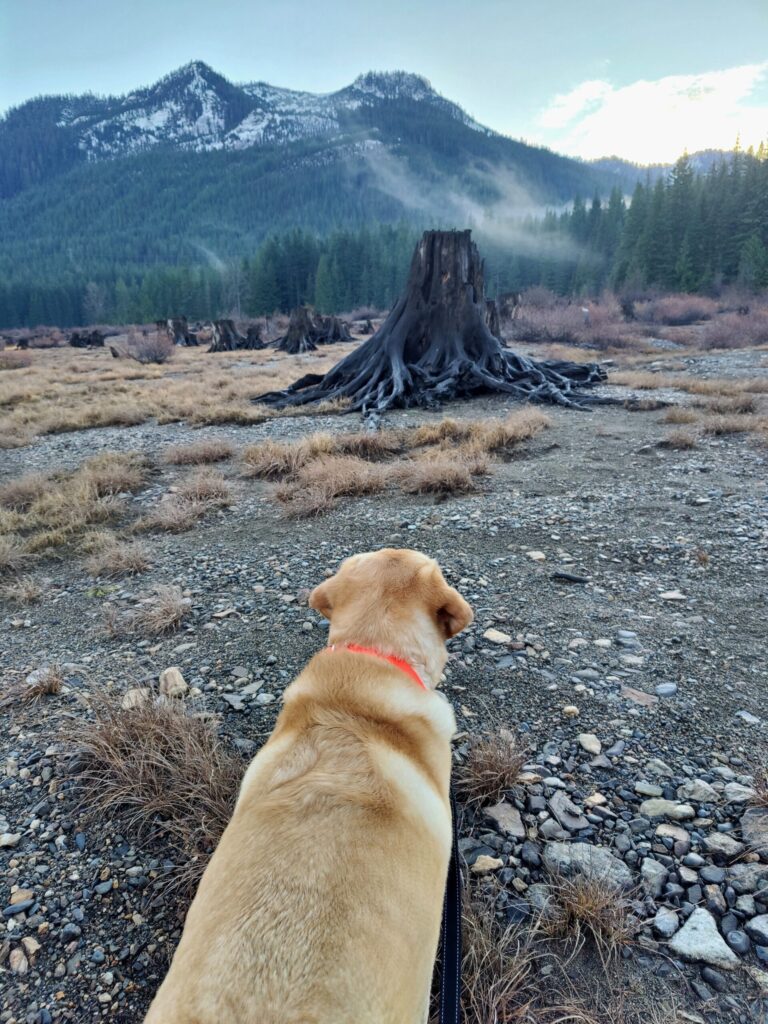
For Boomer and me, the trail has become part of our routine. We walk through wooded paths, open fields, and quiet stretches where the only sound is wind through the trees. There is something grounding about moving through those spaces together that is hard to put into words.
But hiking with dogs safely requires more awareness than many people realize.
Wildlife shares these same trails. Terrain changes quickly. Dogs can become dehydrated or injured far from help. Even a well-trained dog can disappear in seconds when something catches their attention.
Over the years I have seen several situations on the trail that reminded me how fast things can go wrong. I have helped people search for dogs that slipped their leash and ran into the woods. I once watched coyotes quietly tracking a small dog from a distance while the owner walked ahead, completely unaware. And I have had moments on our own hikes where something felt off just before Boomer’s body language confirmed it.
Experiences like these are why trail awareness matters so much when hiking with dogs.
Hiking with dogs safely means preparing for trail conditions, keeping dogs under control, watching for wildlife, and carrying enough water and basic gear. Most trail emergencies happen when dogs wander off, overheat, or encounter wildlife unexpectedly. With a little preparation and awareness, hiking can remain one of the safest and most rewarding activities you share with your dog.
Why Hiking With Dogs Safely Requires Extra Awareness
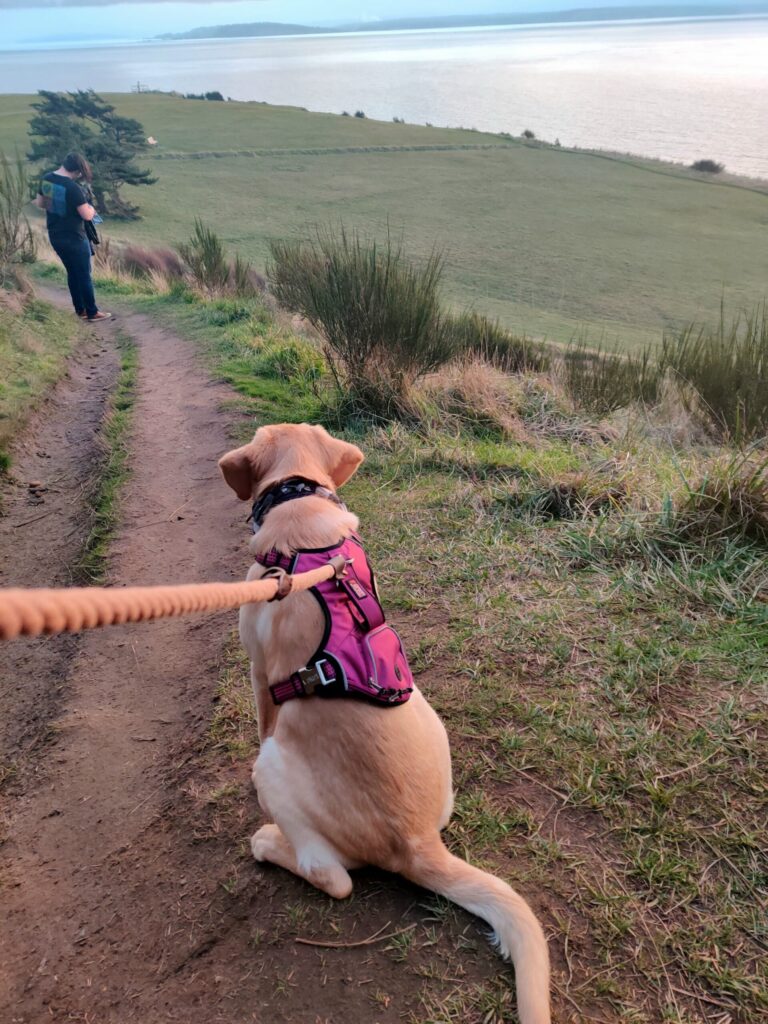
Dogs experience the trail very differently than we do.
They explore primarily through scent. A smell that barely registers to us can send them racing into the brush. Wildlife smells are especially powerful triggers, and dogs often react before we even realize anything is nearby.
Dogs also tend to push themselves to keep up with their people. Many will keep hiking long past the point of exhaustion or overheating, especially a breed like Boomer who treats every outing like it might be his last chance to experience joy.
The outdoor environment adds another layer of unpredictability. Weather shifts quickly. Terrain can go from packed dirt to sharp rock in a short stretch. Wildlife activity varies by season, and the same trail that felt quiet in January can look very different by late spring. Seasonal conditions change the risks dogs face outdoors throughout the year.
Being aware of these small details helps you understand what is happening around you before it becomes a problem.
Preparing Your Dog Before a Hike
Preparation is one of the most overlooked parts of hiking with dogs safety.
Not every dog is physically ready for a long hike right away. Just like people, dogs need time to build stamina, especially dogs recovering from injuries or orthopedic surgery. Boomer and I started with shorter loops on familiar paths before working up to longer trails. That gradual buildup gave his muscles, joints, and paw pads time to adapt, and it gave me a better read on how he handles distance and heat.
Start with shorter walks and increase distance over several weeks. Check the trail conditions before you go. Some routes include steep drop-offs, rocky sections, or narrow ridgelines that are not appropriate for dogs regardless of fitness level.
Temperature matters more than most people expect. Even mild weather can feel warm to a dog moving continuously, especially a larger breed with a dense coat.
Before leaving home, confirm your dog’s ID tags are current and that vaccinations and parasite prevention are up to date. Trails expose dogs to ticks, standing water, and other environmental risks that are easy to overlook when you are focused on the hike itself. One of our previous dogs was bitten by a tick during a hike, and we later suspected Lyme disease, which makes me much more careful about tick prevention and post-hike checks.
Preparation does not take long. But it closes the gap between an enjoyable outing and an emergency.
Wildlife Encounters on Dog Trails


Signs of wildlife we’ve come across on local trails. Even when animals stay hidden, the trail often tells you they’re there.
Hiking trails pass through active wildlife habitat. Even on well-used paths, animals move quietly through the same spaces people and dogs use every day.
Over time you start to notice the signs.
In colder months, coyotes become more visible along our local trails. They tend to move wider ranges when food is scarce, and they are quiet enough that Boomer sometimes does not register them until I have already spotted them in the distance. That awareness gap is exactly why I keep him close in those stretches.
Spring brings different evidence. I have started finding patches of fur along certain sections of trail, disturbed soil, and other signs that predators and prey have been active overnight. I have not seen the animals directly, but the landscape tells the story clearly enough.
I have never encountered a bear on our hikes, and I am grateful for that. But I do occasionally find bear scat along certain sections, which is its own kind of reminder that we are passing through shared habitat. I note where I have seen it and pay closer attention on those stretches for the rest of the season.
One encounter that stayed with me was with a bobcat. On one hike, it crossed the trail just ahead of us and slipped into the brush without a sound. Boomer and I both noticed it at almost exactly the same moment. He stopped. I held the leash. And then it was gone. The whole thing lasted maybe three seconds, but it is the kind of moment that recalibrates how you think about the trail.
Other animals present a different kind of problem. Deer, rabbits, and squirrels can trigger a dog’s chase instinct without warning. Even birds can do the same. Boomer has locked onto geese and a blue heron along the water, completely focused in a way that reminded me how quickly attention can shift. Even a dog that reliably responds to commands at home can bolt the moment something appears ahead.
Years ago I had a dog named Stella who ran straight into a porcupine while exploring along a wooded path. She disappeared into the brush for less than a minute and came back with a face full of quills. The drive to the vet was long, and the treatment was harder on her than I expected. She healed, but that experience changed how I thought about letting any dog off leash near dense brush. Curiosity and confidence in the woods are not always a good combination.
In some regions, hikers also need to be aware of mountain lions. These animals rarely make themselves visible, but they do inhabit many western wilderness areas. If you are hiking in cougar territory, carrying a noise-making device and keeping dogs close and visible matters more than people sometimes realize. If you want a clearer sense of how to handle these moments in real time, I walk through what to do in What to Do If You See Wildlife While Hiking With Your Dog.
The goal is not fear. The goal is familiarity. Understanding what wildlife is active in your area, learning to read the signs they leave behind, and keeping your dog close in areas where encounters are more likely. That awareness makes the trail safer without making it feel smaller.
Why Leash Safety Matters on Hiking Trails





Wildlife we’ve encountered along the trail, from deer and coyotes to birds along the water. These moments are beautiful, but they’re also a reminder of how quickly a dog’s attention can shift.
One of the most common mistakes hikers make is assuming their dog will stay nearby off leash because they always do in familiar environments.
Unfamiliar trails are a different situation. New smells, new sounds, and the sudden appearance of wildlife can override even solid recall training in a matter of seconds.
I have seen several situations where a dog vanished into the woods while exploring off trail. The owners spent hours searching, calling the dog’s name into a forest that absorbed the sound without giving anything back. In one situation close to our area, a dog ran ahead on a steep section of trail and went over the edge. The rescue took days.
These situations are not rare because people are careless. They are common because the trail feels familiar and the dog seems reliable, right up until the moment something changes.
A leash or long line on unfamiliar trails is one of the simplest ways to keep that moment from happening.
Environmental Hazards for Dogs on Hiking Trails
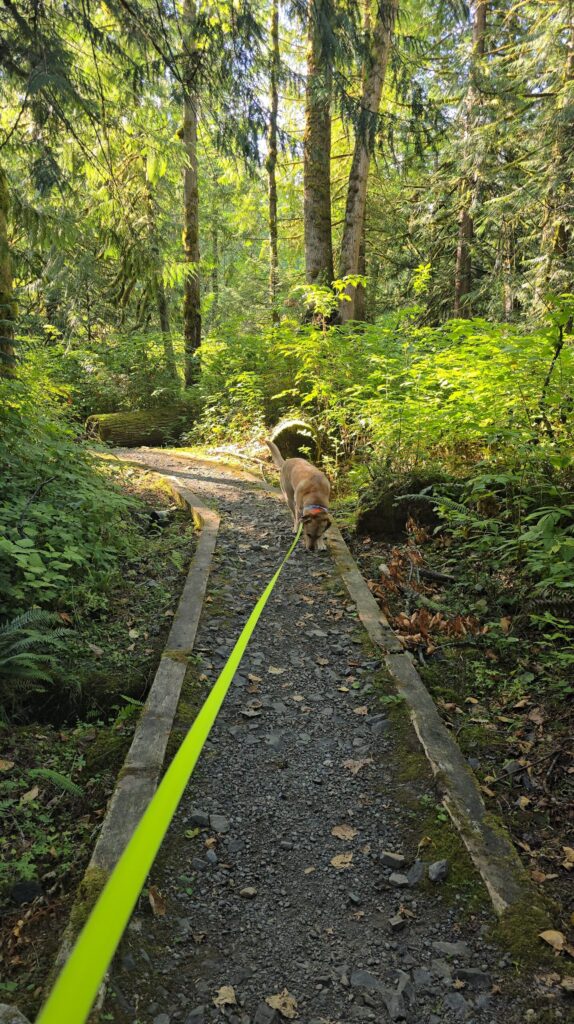
Wildlife is only one part of the picture. The trail environment itself presents risks that are easy to underestimate.
Dehydration happens faster than most people expect, especially in warm weather. Dogs need frequent water breaks, and they often drink more than owners anticipate. Hydration and nutrition both affect how well dogs handle physical activity, especially during longer outdoor adventures. I carry more water than I think we will need, and Boomer proves me right almost every time.
Heat is its own hazard. Dogs cool through panting, which is far less efficient than sweating. On warm days, a dog that looks fine can be in early heat stress without obvious signs. Watching for excessive panting, slowing pace, or seeking shade tells you more than waiting for symptoms to become obvious.
Rough terrain is harder on paw pads than most people realize, especially on longer hikes or trails with significant rock and gravel. I check Boomer’s paws during breaks on longer routes. Small cuts or worn spots caught early are manageable. The same injuries after another two miles of trail become a real problem.
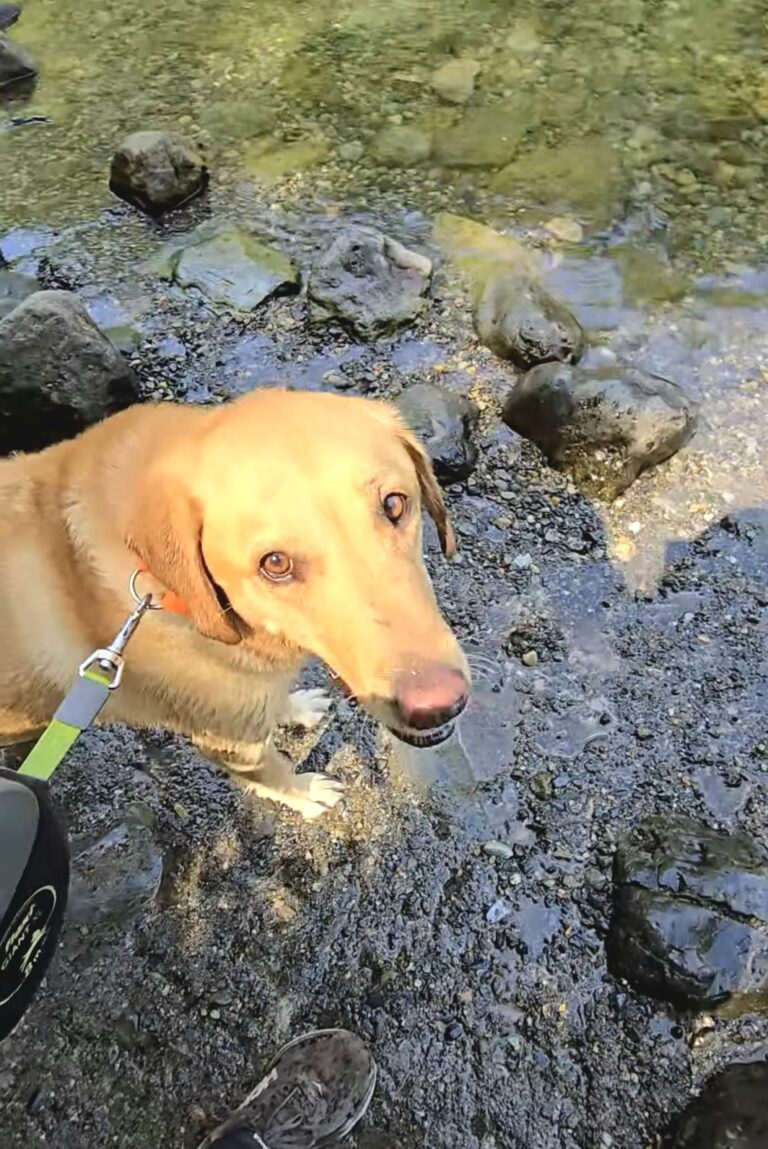
One risk that surprises many hikers is water sources along the trail. Dogs drink from puddles and streams instinctively, and it can be difficult to stop them before they have already gotten a mouthful. Untreated water can carry Giardia and other parasites. Giardia infections in dogs are one of the most common illnesses picked up from contaminated trail water. Boomer developed Giardia after one hiking trip, and while I cannot say with certainty where it came from, the stream he insisted on drinking from despite my better judgment is the obvious suspect. The illness was not severe, but the vet visit and treatment were a reminder that what looks like a clean mountain stream is not always what it appears to be.
If you want a deeper look at how this happens and what to watch for, I break it down in Can Dogs Get Giardia From Creeks and Puddles? What Every Trail Dog Owner Should Know.
Bringing enough clean water for your dog and redirecting them before they reach standing water on the trail is one of the more practical things you can do before the trip. After every hike, I also do a quick tick check before we leave the trailhead.
Essential Gear for Hiking With Dogs
A few well-chosen items make a real difference on the trail, especially on longer or more remote hikes.
Water and a collapsible bowl are non-negotiable. I bring more than I think we will need and offer it frequently, not just when Boomer signals he is thirsty.
A sturdy leash or long line keeps your dog in the range where you can actually respond if something changes. This is not about restricting the experience. It is about having options.
A secure harness can also be helpful in certain situations, especially for younger dogs, dogs still learning leash skills, or trails where you want a little more control. I used one with Boomer when he was younger and still building his trail manners. Over time, we have shifted more toward using a long line, but a well-fitted harness can still be a good option depending on the dog and the environment.
ID tags are essential, and a GPS tracker can add another layer of security beyond basic identification. I do not personally use one, but for dogs that hike off leash or in larger open areas, having real-time location can make a big difference if a dog disappears quickly.
Paw protection is worth considering if your trail has significant rock, gravel, or temperature extremes. For Boomer, I apply a natural paw balm before longer hikes on rougher terrain. Musher’s Secret Paw Wax is a common option hikers use because it creates a protective barrier without making paws slippery and holds up well over longer distances. For dogs that resist having their paws handled, even a brief application before the trailhead and a check during a rest stop makes a difference.
A small dog first aid kit is easy to carry and genuinely useful. Antiseptic wipes, gauze, and self-adhesive bandage wrap handle most minor trail injuries well enough to get you back to the car without making things worse.
Poop bags are essential. It’s a small habit, but part of respecting the trail and the people who share it.
I also carry an extra leash in my pack. It has come in handy more than once when helping someone search for a lost dog on the trail. It is a small thing to bring, but it can make a real difference if something unexpected happens.
Hiking With Dogs Safely Is Ultimately About Awareness

Gear and preparation matter, but the most useful thing you can bring on a trail is attention.
Notice how your dog is moving. Watch for changes in body language, especially in areas where wildlife has been active. Pay attention to the terrain ahead, not just where you are standing.
Dogs rely on us to read environments they do not fully understand. Boomer certainly does. They experience the trail with everything they have. Our job is to stay one step ahead so they can do that safely.
When we stay aware of the surroundings and respect the landscape we are moving through, hiking with dogs safely remains one of the most rewarding things we can share with them. It does not have to be complicated. It just has to be intentional.
Frequently Asked Questions
Is it safe to hike with dogs?
Yes, hiking can be safe and deeply enjoyable for dogs when owners prepare properly, stay aware of wildlife activity, and monitor their dog for fatigue or dehydration. Most problems on the trail are preventable with basic awareness.
Should dogs be on leash while hiking?
Many trails require leashes and using one is generally the safer choice even when it is not required. Even well-trained dogs can react instantly to wildlife or unfamiliar terrain in ways that put them at risk.
How much water does a dog need during a hike?
Dogs should have access to water regularly throughout a hike. A general guideline is to offer water every 15 to 30 minutes in warm weather, or anytime your dog shows signs of slowing down. Bring more than you expect to need.
What wildlife should hikers watch for when hiking with dogs?
Coyotes, bears, mountain lions, porcupines, and bobcats can all pose risks depending on your region and trail conditions. Awareness of local wildlife activity matters more than having a specific list to avoid.
How can I protect my dog’s paws while hiking?
Check paw pads during breaks, avoid extremely hot or sharp surfaces when possible, and consider a protective paw balm before longer hikes on rough terrain. Some hikers also use boots for extreme conditions.
Can dogs drink from streams or puddles on hiking trails?
Dogs often drink from streams, puddles, or standing water on trails, but untreated water can carry parasites like Giardia. Bringing clean water for your dog and redirecting them away from standing water reduces the risk of illness.
What should I bring when hiking with my dog?
A few simple items can make hiking with dogs much safer and more comfortable. Bring enough water for both you and your dog, along with a collapsible bowl so they can drink easily during breaks. A sturdy leash or long line helps keep your dog within reach if wildlife appears or terrain becomes unsafe. It is also smart to carry ID tags or a GPS tracker, especially on unfamiliar trails. Many hikers bring paw balm or protective boots for rough terrain, and a small dog first aid kit with antiseptic wipes and bandage wrap in case of minor injuries. Most importantly, bring more water than you think you will need and pay attention to your dog’s energy and behavior throughout the hike.
At Joyfolk Pets, we believe wellness begins in the everyday moments we share with our animals.
Rooted in nature. Made with heart.