What to Do If You See Wildlife While Hiking With Your Dog
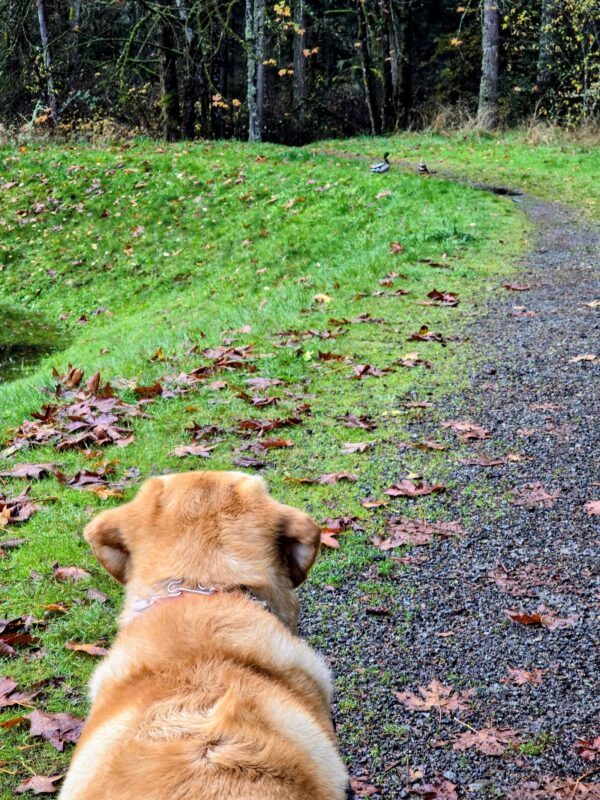
Hiking with your dog feels simple on the surface. You step onto the trail, fall into a rhythm, and let them explore the world the way dogs do. If you hike often, you’ve probably thought about wildlife safety and what to do when you come across animals on the trail.
Hiking with dogs wildlife safety isn’t something you think about all the time, but it becomes a lot more real the moment you encounter something unexpected.
But the longer you spend out there, the more you realize you are not alone.
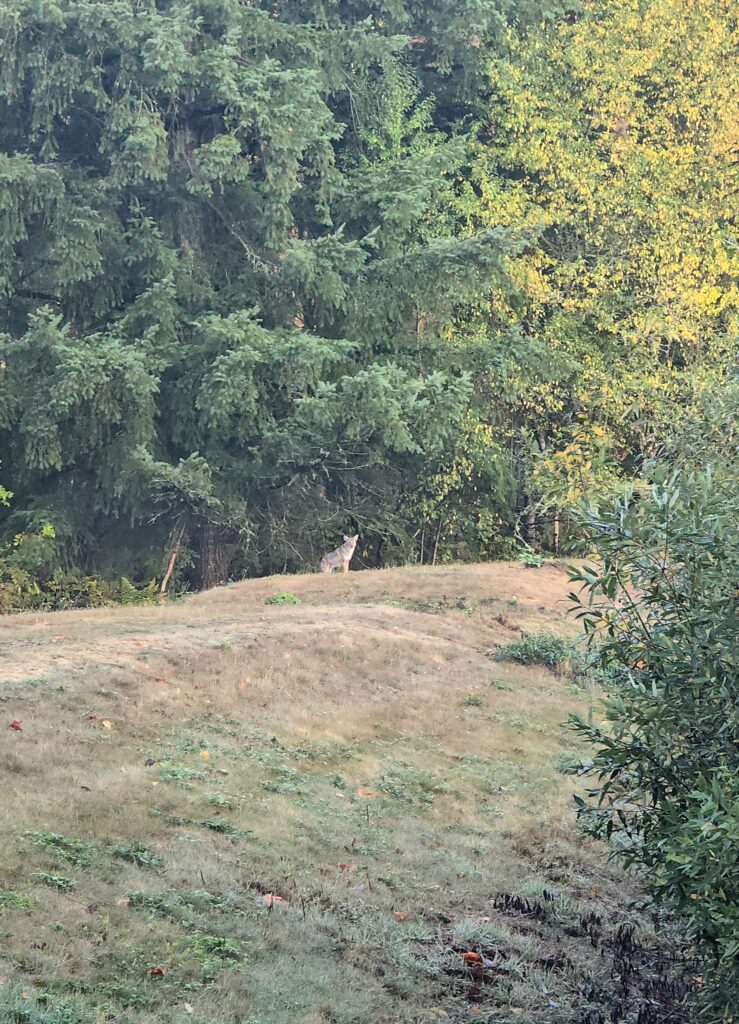
Over the years I’ve had moments on the trail that changed how I move through them. Coyotes tracking quietly along the edge of a path, close enough to notice but easy to miss if you aren’t paying attention. A bobcat crossing ahead of us and disappearing just as fast. In California I once came too close to a coyote den and heard the high, sharp chirping that signals you’ve stepped into their space. Another time it was a rattlesnake stretched across the trail, still and almost invisible until it wasn’t.
Even outside of hiking, the pattern holds. Bears near a parked car in Alaska. Wildlife appearing in places you don’t expect, but that are very much part of their territory.
None of those moments turned into something worse. But they were enough to shift how I think about trail time, especially with Boomer alongside me. This post is what I’ve learned from those experiences and what I do differently now. If you’re newer to hiking with your dog, I share a more complete breakdown of trail safety in Hiking With Dogs Safely: Trail Risks, Wildlife Awareness, and Essential Tips.
Wildlife is part of the experience. Most of the time it stays at a distance. When it doesn’t, what you do next matters a lot.
Why Wildlife Awareness Matters More Than You Think
On most hikes, you won’t see much at all. That’s part of what makes it easy to assume the trail is quiet.
Wildlife is there whether you see it or not.
Animals move through the same paths, cross the same water sources, and rest in areas we walk through regularly. Most of the time they’re aware of you long before you notice anything around you.
Dogs change that dynamic.
Their movement, scent, and energy draw attention in ways we don’t always recognize. A dog that is curious, alert, or pulling toward something you can’t see is often already responding to something nearby. Boomer has done this more times than I can count, and he’s usually right.
Awareness matters not because encounters are common, but because when they do happen, they happen fast. Your response in that moment matters more than anything else.
Signs Wildlife Is Nearby on the Trail
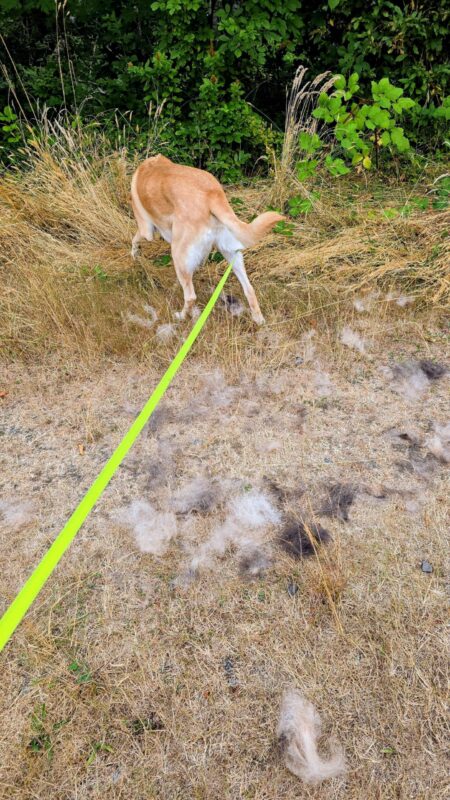
Most wildlife encounters don’t start with seeing the animal. They start with signs that are easy to overlook.
Your dog is often the first signal. A change in posture, stopping suddenly, intense sniffing, or locking onto something you can’t see yet are all indicators that something is close. Boomer has stopped mid-stride on trails and refused to move forward before I understood why. That shift in his body is usually the first thing I notice now.
Scat along the trail is another common sign. You start to notice it more the longer you hike. Different shapes, different locations, sometimes right in the middle of the path. It tells you what animals are moving through the same areas you are.
Tracks are worth paying attention to as well, especially in mud, sand, or snow. Even faint ones tell you what has passed through recently.
Sometimes it’s the environment itself that shifts. Disturbed ground, patches of fur, areas where something has clearly moved through.
And sometimes it’s what you don’t hear. A sudden quiet where birds stop or the usual background noise drops off can signal that something has entered the area.
By the time you see wildlife, the earlier signals have usually already passed. Catching them early gives you more time to respond.
Wildlife You Might Encounter on the Trail
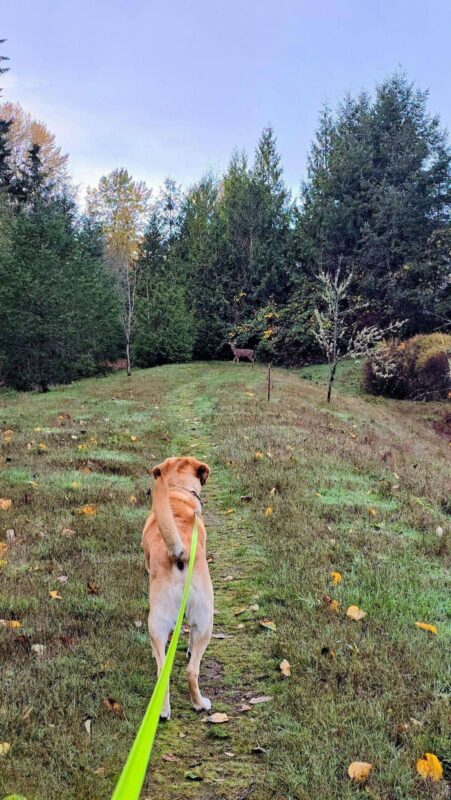
The specific wildlife you encounter depends on where you hike, but the patterns are often similar.
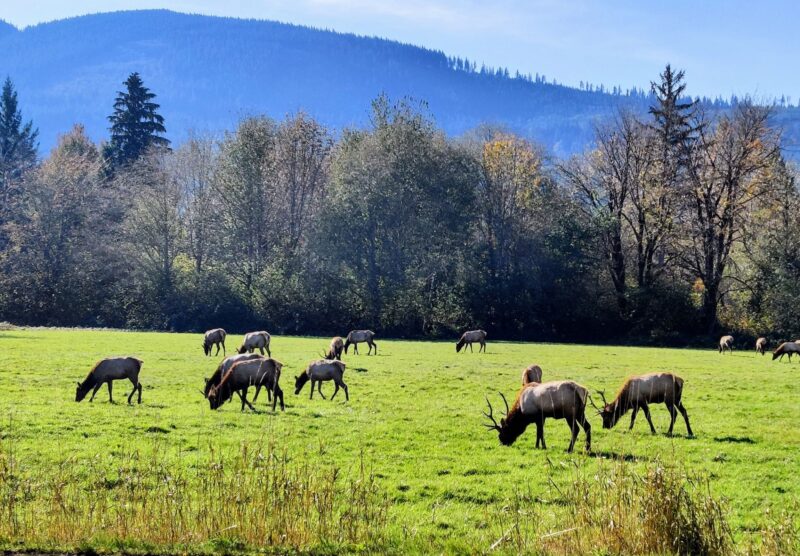
Here in the Pacific Northwest, deer, elk, coyotes, bobcats, and bears are among the more common encounters, especially in more open or meadow areas. If you’re hiking somewhere new or unfamiliar, it’s worth researching what’s active in that area before you go.
Coyotes tend to move quietly and keep their distance, but that distance can close without much warning. I’ve seen them tracking from behind or off to the side of a trail, completely unnoticed until you know what to look for. What most people don’t realize is that coyotes will sometimes follow at a distance for a stretch of trail before you notice them at all. They’re drawn in by dog scent and curious about the interaction. The behavior I’ve seen most often is a slow parallel track, just off the path in the brush, watching. Boomer usually picks up on it before I do. That’s actually the more common encounter pattern than a direct approach, and it’s easy to miss entirely if you aren’t watching your dog’s body language while you walk.
Bobcats are harder to spot. The few times I’ve seen one it crossed the trail quickly and disappeared just as fast. They’re not typically interested in people, but the experience is a reminder of how close they can be without you realizing it.
Bears are less common in terms of direct encounters, but their presence is often visible through signs like scat or disturbed areas. Knowing they’re active in a region changes how you move through the trail even without seeing one.
Cougars are another animal worth knowing about if you hike in the Pacific Northwest. They’re rarely seen, but that’s actually part of what makes them worth respecting. They move quietly, tend to stay out of sight, and are more likely to be aware of you than the other way around. Hiking with a dog doesn’t deter them the way it might with some other animals, so knowing the basics of how to respond if you do encounter one is worth having in your back pocket before you need it.
Then there are prey animals like deer, rabbits, squirrels. These are the ones most likely to trigger a dog’s instinct to chase. Even a well-trained dog can react instantly if something bolts across the trail. Boomer has locked onto geese and a blue heron along the water in a way that shifts his full attention in seconds, and neither of those were remotely a threat.
Elk are different. They’re less likely to run immediately and can become defensive if you’re too close, especially during certain times of year, which makes distance even more important than it is with deer.
Each of these encounters looks different, but they share the same reality. The trail is shared space. Your dog is part of that interaction whether you see it happening or not.
How Dogs React to Wildlife and Why It Matters
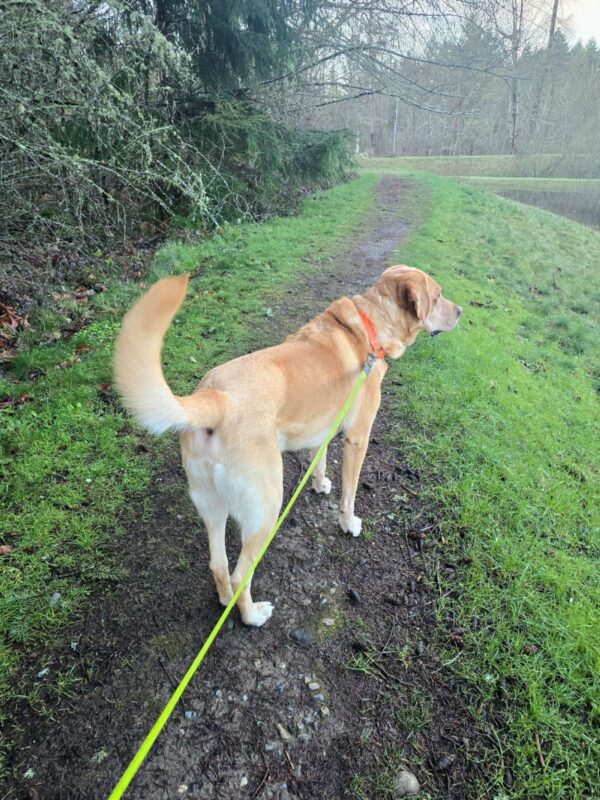
Dogs don’t experience the trail the way we do.
A dog walking calmly can lock onto something in an instant. Posture shifts, focus narrows, and everything else disappears. Chase instinct plays a big role here. Deer, rabbits, birds, or anything that moves fast can trigger it regardless of how well-trained your dog is in other situations.
Years ago one of my dogs ran into a porcupine after disappearing into the brush for less than a minute. That was the experience that made me understand how quickly the trail can change.
Keeping your dog on a leash or long line, especially in wildlife-active areas, is one of the simplest ways to stay ahead of that moment. The goal isn’t to eliminate instinct. It’s to be ready for it.
Hiking With Dogs Wildlife Safety: What to Do on the Trail
Most wildlife encounters are brief. When they’re not, your response determines how the situation goes.
Stay calm first. Dogs read your energy quickly, and a sudden reaction can escalate the situation before you have a chance to think.
Keep your dog close. A leash or long line gives you immediate control and prevents your dog from reacting before you can step in.
Create space. Give the animal a clear path and avoid moving directly toward it. Most wildlife will leave if they don’t feel cornered.
Avoid turning your back or running. Sudden movement can trigger a chase response, especially with predators.
Use your voice if needed. A calm, steady tone helps keep your dog grounded and signals your presence without alarm.
Then back away slowly. Increase distance without rushing, keeping your attention on both your dog and the animal ahead of you.
Wildlife doesn’t want interaction. It wants space. A calm, controlled response is almost always enough to let the situation resolve on its own. This approach is consistent with general guidance from the National Park Service, which emphasizes staying calm, creating space, and avoiding sudden movement during wildlife encounters.
What to Do If Something Goes Wrong
Even with awareness, things can shift quickly.
If your dog reacts or gets too close, the priority is regaining control without escalating. Keep your voice steady, shorten the leash, and create distance as calmly as you can.
If contact happens, focus on separating your dog safely and moving away from the area. Avoid chasing your dog if they bolt. Stopping and calling them back is almost always more effective than running after them.
Once you’re clear, take a moment to check your dog. Look for injuries, check their paws, and watch for changes in behavior. Some issues aren’t obvious right away. If anything feels off later in the day or the following morning, it’s worth a call to your vet.
Most encounters don’t turn into emergencies. But knowing how to respond if they do makes a real difference.
Simple Safety Habits Before You Hike
Wildlife encounters are easier to manage when you’ve thought about them before you get to the trail.
Start with knowing the area. Some trails are more active at certain times of year, during certain hours, or near water, brush, and denning areas. A few minutes of research before a new hike is worth it.
Keep your dog on a leash or long line in wildlife-active areas. It’s one of the simplest ways to stay ahead of a situation before it starts. On longer hikes, I also carry a short drag line for Boomer, a collapsible water bowl so he isn’t drinking from trail sources, and a basic first aid kit sized for dogs. None of it takes up much space but having it has changed how confident I feel out there.
Build a few basic trail commands into your regular practice. “Leave it,” “wait,” and a solid response to your voice are all useful when things shift quickly. These matter more on the trail than they do in most other settings.
In areas with higher wildlife activity, small adjustments help. Carrying a bear bell or making light noise reduces the chance of surprising an animal, especially in bear or cougar country where visibility is low, or areas where elk if known to be active. Staying aware of your surroundings before your dog reacts is the bigger habit. Watching the trail ahead, noticing shifts in sound, and paying attention to scat, tracks, or disturbed ground all give you more time to respond.
Water on the trail comes with its own set of risks too. If your dog is the type to drink from creeks or puddles, I wrote more about what they can pick up and what to watch for in Can Dogs Drink From Creeks or Puddles Safely?.
None of this has to feel complicated. These are small habits that make the trail steadier for both of you.
Moving Through the Trail With More Awareness
The trail felt different after the coyote den in California. Not scary, just more real.
I pay attention differently now. Not in a way that makes hiking feel tense, but in a way that feels more grounded. I watch Boomer’s body language before I look ahead on the trail. I notice when the birds go quiet. I check the muddy spots for tracks out of habit now rather than curiosity.
Most days, nothing happens. We find our rhythm, Boomer explores, and we come home tired in the good way.
Over time, hiking with dogs wildlife safety becomes less about rules and more about awareness. But on the days when something does shift, those small habits are what keep it from becoming something more. That’s really all this is about. Not avoiding the trail or overthinking every step. Just moving through it with a little more attention to what’s already there.
The trail doesn’t get less enjoyable when you hike this way. It actually gets more interesting.
Frequently Asked Questions
What should I do if I see wildlife while hiking with my dog?
Stay calm, keep your dog close on a leash, and give the animal space. Most wildlife will leave if they don’t feel threatened. Backing away slowly without turning your back is usually the safest response.
What wildlife is most dangerous for dogs on hiking trails?
Coyotes, bears, cougars, elk, and rattlesnakes are among the higher-risk encounters depending on your region, particularly in the Pacific Northwest. Coyotes are common and may approach quietly. Bears are less likely to engage but can be unpredictable if surprised. Cougars are rarely seen but should be taken seriously. Elk are generally not aggressive but can become defensive if you get too close, especially during certain times of year. Even prey animals like deer can cause injury if a dog chases and corners one. Research what’s active in your specific area before hiking somewhere new.
Should dogs be on a leash in wildlife areas?
Yes. A leash or long line is one of the most effective safety tools in wildlife-active areas. Even dogs with solid training can react instinctively to movement or scent before you have a chance to respond.
How do I know if wildlife is nearby on a trail? Watch your dog first. Changes in posture, sudden stops, intense sniffing, or focused staring are often the earliest signals. Scat, tracks, disturbed ground, and sudden quiet from birds are other common indicators.
What should I do if my dog tries to chase wildlife? Stay calm, shorten the leash, and focus on regaining control without chasing your dog. Creating distance from the situation is the priority. Chasing can escalate the interaction and make recall harder.
Can wildlife attacks on dogs happen on hiking trails? They can, but they are not common. Most wildlife avoids interaction. Situations are more likely to escalate when dogs approach, chase, or surprise animals at close range.
How can I prevent wildlife encounters while hiking with my dog? Stick to established trails, keep your dog close, make light noise in low-visibility areas, and stay aware of your surroundings. Small consistent habits reduce the chance of surprising wildlife significantly.
What should I do if I’m hiking somewhere unfamiliar? Research the wildlife active in that area before you go. Different regions have different animals and risk levels. Knowing what you might encounter helps you respond appropriately rather than reactively.
At Joyfolk Pets, we believe wellness begins in the everyday moments we share with our animals. Rooted in nature. Made with heart.