TPLO Recovery Essentials for Large Dogs: What Actually Helped Us

Bringing Your Dog Home After TPLO Surgery
A year apart. Same date. Opposite leg.
Boomer’s second TPLO surgery wasn’t planned the way the first one was. We went in on a Tuesday in late November for a vet assessment and X-rays after an injury that happened over the weekend. The surgeon happened to be there that day. The knee was unstable. We made the decision, and a few hours later I was picking him up post-op.
There’s something sobering about leaving your dog for imaging and coming home with a dog who has just had major orthopedic surgery. If you’re preparing for TPLO surgery, you’re probably wondering what you actually need at home to manage recovery safely.
The only reason that day felt manageable is because I had already been through TPLO recovery once before. In fact, one year to the day, Boomer had TPLO surgery on his left leg. I had supplies packed away, and I knew what recovery actually looked like inside our home. While he was in surgery, I ran home and pulled everything back out.
TPLO recovery for a large dog is not just about healing bone. It’s about setting up your home so you can safely manage 12 to 16 weeks of restricted movement.
It means thinking ahead about every surface your dog will step on, every doorway they’ll pass through, and every time they’ll need to stand up, turn around, or go outside. It means preventing slips before they happen, planning slow supported potty breaks, and keeping them mentally calm when their body wants to move faster than it safely can.
For large dogs especially, recovery becomes a full-house adjustment. Furniture gets rearranged. Rugs get layered. Access gets limited. Routines get simplified.
The surgery may last a few hours. The recovery lives in your home for months.
This isn’t a medical guide to TPLO recovery. It’s a practical list of the recovery essentials that helped us create a calmer, safer environment for a large dog during a long healing period.
Always follow your surgeon’s protocol. This is simply what made recovery more manageable in our house.
NOTE: While many of these tools were helpful for our large Labrador, the same principles apply to dogs of all sizes recovering from TPLO surgery.
What Is TPLO?
TPLO stands for Tibial Plateau Leveling Osteotomy, a surgical procedure commonly performed to stabilize a torn cranial cruciate ligament (CCL) in dogs. Recovery after TPLO surgery typically requires 12 to 16 weeks of restricted activity while bone healing and muscle rebuilding take place.

Setting Up a Safe TPLO Recovery Space at Home for a Large Dog
Most of TPLO recovery happens in stillness.
For weeks, your dog isn’t hiking, running, or playing. They’re resting. A lot. That means the environment you create at home matters more than you might expect.
I relied heavily on a large portable crate designed for big dogs that allowed him to fully stand, turn, and reposition comfortably, but was still structured enough to prevent pacing or sudden movement. It gave Boomer space to stand and reposition comfortably, but it also kept him safe when I couldn’t watch him closely. He could be near me while I worked without risking a sudden jump onto the couch or an excited dash to the doorbell.
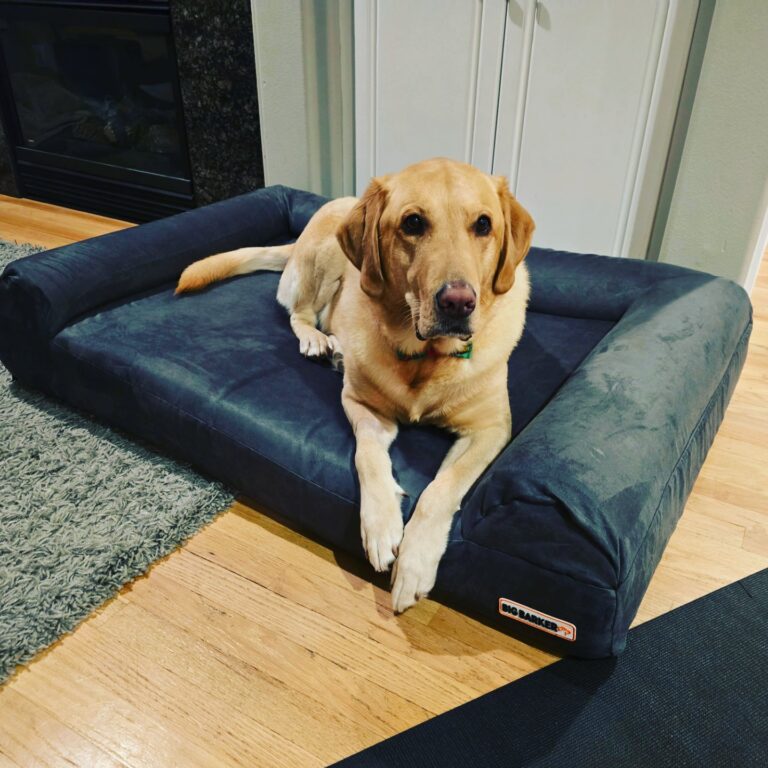
An orthopedic bed with dense, supportive foam was essential for a large dog recovering from TPLO surgery, especially knowing he would spend weeks lying down with limited movement. I invested in a Barker bed before his first surgery, knowing he’d spend long stretches lying down. During both recoveries, I also made sure his other beds were accessible in common areas so he could rotate between spots. That small adjustment made the house feel less restrictive.
Washable blankets were another quiet hero. With limited grooming and shaved fur, comfort and cleanliness mattered more than usual.
Preventing Slipping After TPLO Surgery

Hardwood floors were one of the biggest challenges early on. I don’t have wall-to-wall carpet, and the rugs I do have don’t cover everything. Non-slip yoga mats became critical because they provided traction without sliding on hardwood, which helped prevent sudden slips when he was relearning to bear weight. I layered them along his path to the door and around his resting areas so he wouldn’t slip while weight-bearing on a healing leg.
If you’re worried about your dog slipping after TPLO surgery, traction is foundational. It isn’t dramatic. But it prevents small setbacks that can become bigger ones.
In homes with stairs or open layouts, baby gates or exercise pens can be just as important as traction. We didn’t rely heavily on gates because I was home and supervising closely, but blocking stairs and limiting access to certain rooms is often necessary in the early weeks of TPLO recovery. Preventing a single unassisted jump or stair attempt can protect weeks of healing.
I also kept his elevated food and water bowls accessible. Standing to eat can feel awkward in the early days, and minimizing strain wherever possible made meals calmer.
Choosing a Comfortable Cone After Surgery
The vet sent us home with the standard plastic cone. After his first surgery, I had also purchased a softer, more flexible option. Because I work from home and supervise closely, we didn’t rely on it heavily except when I needed to leave him unattended.
Many dogs, however, spend 10 to 14 days wearing a cone. Comfort during that window matters more than you think.
Ice Packs and Temperature Management During TPLO Recovery

We rotated large, flexible ice packs that could contour around his knee during the first few days after TPLO surgery, exactly as directed by our surgeon. Having multiple packs in the freezer meant we weren’t scrambling when one thawed.
In the early phase of TPLO recovery, cold therapy helps manage inflammation. Later in recovery, we incorporated gentle heat, again following veterinary guidance. The timing and protocol can vary by surgeon, so this isn’t one-size-fits-all. What mattered most was being prepared for both phases so we weren’t improvising when instructions changed.
Because his entire back end and part of his back were shaved, winter added another layer to recovery. Short, controlled potty breaks meant I wanted him warm and dry. A simple winter coat helped maintain body temperature during those early weeks when muscle mass and coat coverage were reduced.
Recovery is already uncomfortable. Small adjustments don’t change the surgery, but they can make the healing period gentler.
How to Keep Your Dog Calm During TPLO Recovery
The incision heals faster than the frustration.
For an active dog, the hardest part of TPLO recovery isn’t always the pain. It’s the stillness. Once the initial soreness fades, many dogs feel better before they are actually healed. That’s when structure matters most.
Sling Support and Controlled Movement After TPLO
Mobility support is not optional in the early weeks after TPLO surgery.
I used a rear-support sling sized for large breeds that allowed me to lift and stabilize his back end without straining my own back, and that I could quickly put on and remove by myself. It wasn’t the most advanced version available, but it was practical and easy to manage alone. We have two steps leading outside, and unassisted stairs were not allowed. For 8 to 12 weeks, depending on stage and surgeon guidance, every transition was controlled.
You can use a towel in a pinch, and many people do. But after assisting a large dog multiple times a day for weeks, something designed for the job makes a difference.
Leash control was equally important. Even short bathroom breaks carried risk. Excitement at the doorbell or spotting another dog or Boomer’s favorite bunny could undo progress. I kept him on leash at all times unless he was confined in his playpen. No jumping. No couch access. No unassisted stairs.
Later in recovery, once restrictions eased and under veterinary guidance, I introduced a retractable leash so he could have more freedom to sniff while still remaining controlled.
The timeline for any progression should always follow your surgeon’s instructions.
Mental Stimulation During Crate Rest

If your dog won’t stay calm after TPLO surgery, you’re not alone.
Mental enrichment becomes essential during crate rest and restricted movement. Even during recovery, maintaining gentle daily rhythms helps dogs feel secure. I talk more about that in A Ritual of Care: 5 Daily Routines That Strengthen the Bond With Your Pet.
Lick mats, frozen enrichment, stuffed bones and simple, calm interactive toys helped regulate Boomer’s energy when physical activity wasn’t allowed. I froze baby food in small jars to keep him engaged while I guided gentle at-home rehab exercises that had been approved by our physical therapist.
These tools didn’t replace movement. They softened the edges of restriction. They gave him something productive to focus on when his body needed stillness.
Recovery isn’t just about healing bone. It’s about preventing preventable setbacks.
Nutrition During Reduced Activity After TPLO Surgery
Both times, our veterinary team recommended reducing Boomer’s calorie intake because his activity level dropped significantly during TPLO recovery.
When movement decreases, energy needs change. But feeding less volume made quality even more important to me. If you’re cutting portions to prevent weight gain during crate rest, nutrient density matters. If you’re looking for simple ways to support nutrient density during recovery, I’ve shared ideas in How to Build a Balanced Dog Bowl with Real Food Toppers.
I focused on maintaining strong protein sources while adjusting total calories. Rapid weight gain during recovery puts unnecessary strain on a healing joint, especially in large dogs.
Medication can also disrupt digestion. I kept bone broth on hand for hydration and appetite support, used pumpkin to help regulate stools during heavier medication cycles, and incorporated goat’s milk or yogurt when appropriate. We continued fish oil and Cosequin as part of his existing joint support plan, and I added a probiotic during periods when he was on multiple prescriptions.
Supplements during surgical recovery should always be discussed with your veterinarian. This is simply what supported Boomer well under professional guidance and fit within the protocol we were given.
Recovery nutrition isn’t about doing more. It’s about supporting healing while preventing setbacks.
Physical Therapy Tools After TPLO Surgery (Only After Clearance)

After Boomer’s first TPLO surgery, I worked with a canine physical therapist. The exercises we practiced there became the foundation for what I later repeated at home.
Once we were formally cleared to begin rehabilitation work, I used a half BOSU ball for balance training and improvised cavaletti poles using broom and mop handles. These tools supported controlled strength-building and coordination as his stability improved.
Physical therapy after TPLO surgery should never be improvised without professional instruction. Progression timing matters. Angles matter. Load-bearing matters.
But once you’ve been guided properly, having simple equipment at home makes continuing a structured rehab program realistic and consistent.
Rehabilitation isn’t about pushing recovery faster. It’s about rebuilding strength carefully so the joint is supported long term.
TPLO Recovery Essentials Checklist
TPLO Recovery Is Demanding. Preparation Makes It Steadier.

TPLO recovery is long. It requires patience, structure, and restraint. But it is survivable. Twice over, in our case.
If I had to prepare for TPLO surgery again, these are the recovery essentials I would want ready before surgery day. Not because they’re trendy. Not because they appear on every checklist online. But because they made our home calmer, safer, and more manageable during a demanding season.
You can’t control how fast healing happens. But you can control the environment, the structure, and the support you build around it.
Thoughtful preparation doesn’t eliminate the hard parts of TPLO recovery. It simply makes them steadier.
Frequently Asked Questions About TPLO Recovery
How long is TPLO recovery for a large dog?
Full TPLO recovery typically ranges from 12 to 16 weeks for most dogs, though muscle rebuilding can continue beyond that. In Boomer’s case, he remained on strict leash control for 16 weeks before being cleared for off-leash activity. Your surgeon’s protocol and your dog’s healing progress will determine the exact timeline.
When can a dog use stairs after TPLO surgery?
Most surgeons restrict unassisted stair use for at least 8 weeks, sometimes longer. Some dogs are gradually cleared after follow-up X-rays confirm bone healing. In our experience, assisted stairs with a sling were necessary early on, and unassisted stairs were only reintroduced after veterinary clearance.
When can a dog jump on the couch after TPLO?
Jumping is typically restricted for 8 to 12 weeks, and often longer for large or highly active dogs. Even after bone healing is confirmed, controlled strength and muscle rebuilding are important before allowing free jumping. Always wait for explicit veterinary clearance before reintroducing couch or bed access.
How do you keep a dog calm after TPLO surgery?
Structure and supervision matter more than sedation. Crate or playpen confinement, leash control indoors, mental enrichment tools, and consistent routines all help prevent sudden bursts of activity. Many dogs feel better before they are fully healed, so preventing overexertion becomes part of the recovery plan.
Do dogs need a sling after TPLO surgery?
Not every dog requires a sling, but many benefit from temporary support during bathroom breaks and stairs in the early weeks. Large dogs, in particular, may need assistance with balance while weight-bearing improves. Your veterinary team can advise based on your dog’s stability and home setup.
What size crate is best for TPLO recovery?
For TPLO recovery, the crate should be large enough for your dog to stand fully upright, turn comfortably, and lie down without crowding, but not so large that they can pace or attempt short bursts of movement. Large dogs often need heavy-duty crates or reinforced portable pens designed specifically for their weight.
Are yoga mats enough to prevent slipping after TPLO surgery?
In many homes, thick non-slip yoga mats or rubber-backed runners are enough to provide temporary traction during recovery. The key is ensuring they do not slide on hardwood floors. In homes with large open spaces or stairs, additional barriers such as gates may be necessary to reduce risk.
At Joyfolk Pets, we believe wellness begins in the everyday moments we share with our animals.
Rooted in nature. Made with heart.