Holiday Road Trips With Pets: How to Travel Safely and Help Them Settle In

A holiday road trip with pets has two stretches that need planning. The first is the drive, which in winter can mean snow, closures and mountain passes. The second is the arrival, when your pet steps out of the car into an unfamiliar house just as relatives show up, doors keep opening, children race around and dinner is underway.
When I lived in Southern California, I drove to Seattle for the holidays with my dogs more than once, then made the long drive back to Southern California afterward. Those winter trips meant crossing mountain passes in both directions. I’ve also traveled with pets to hotels, cabins, vacation rentals and campgrounds over the years. More recently, I took Penelope, my Maine Coon, on her first trip with us.
Sometimes the second half of the trip is harder than the drive.
What to Pack for a Holiday Road Trip With Pets
Packing for a holiday road trip with pets means thinking about both the drive and what they’ll need once you arrive. I bring their regular food, water, medications and the things they use every day, but I also keep anything we might need on the road somewhere I can actually reach it.
That matters even more when winter weather is possible along the route. Crossing mountain passes in winter changed how I pack. A pass can close, a crash can stop traffic, and weather can turn a straightforward drive into hours of waiting. The Washington State Department of Transportation recommends checking road and weather conditions, allowing extra time and carrying chains and other winter-driving supplies. Its winter-driving checklist specifically warns that crashes, pass closures and other winter events can mean unexpected time in the car.
When a pet is in the car, their needs belong in that plan too.
I pack for the human side of a delay with food, water, warm layers, a flashlight and a charger, then think through what the animals would need during those same extra hours. That means additional pet food and water I can reach without unpacking the car, medications that aren’t buried under luggage, and a leash and carrier that are easy to get to.
If you’re traveling somewhere colder than home, I also have a deeper look at cold-weather care for dogs and cats in my winter wellness article.
For a cat, I also keep a small portable litter box and some of her regular litter in the car, even when a full-size box is waiting at the destination. That box at the other end doesn’t help much if a mountain pass closes and you’re sitting in traffic.
The carrier should be secure and accessible too. If you want a harness and leash as an additional option, introduce and properly fit them before the trip. A frightened cat wearing a new harness for the first time isn’t something I’d want to discover during an emergency.
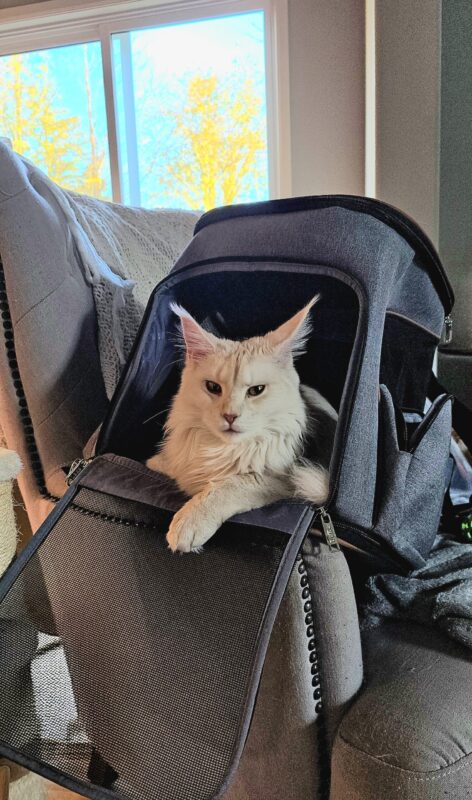
Beyond emergency supplies, I bring the things our pets actually use rather than trying to recreate the whole house. That means regular food, bowls, familiar blankets and a few favorite things. For Boomer, we’ve traveled with a roll-up bed and washable blankets. For Penelope, that includes her favorite bed and normal litter.
I learned that one the hard way.
On her recent cabin trip, I brought a portable litter box but swapped in a crystal travel litter for the pressed-wood litter she normally uses. She wouldn’t use the box. She was already dealing with the car ride, a strange house and unfamiliar smells, and I had changed her bathroom on top of it.
We got through it, but I won’t make that mistake again. Travel is not the time to experiment with something your pet considers essential.
How to Set Up the Car for a Holiday Road Trip with Pets
I decide where the animals are riding before I start fitting suitcases, presents and everything else into the car. Their safe space is not whatever happens to be left after the luggage goes in. The luggage has to fit around them.
Pets should be secured appropriately in the vehicle, and whatever setup you use should already be familiar before departure morning. For cats, that generally means a secure carrier. For dogs, the right setup depends on the dog and vehicle.
I also keep the things I may need during the drive where I can actually reach them. Food, water, medications, leashes, waste bags and emergency supplies don’t do much good underneath six suitcases and a bag of Christmas presents.
At stops, I treat every open car door as an escape opportunity. Boomer is connected to his leash before the door opens, and I don’t open a cat carrier at an exposed highway rest area. Familiar pets can make unfamiliar choices when they’re tired or startled.
Long drives also need more time than the map suggests. The American Veterinary Medical Association (AVMA) recommends stopping about every two hours on long car trips so dogs can exercise and relieve themselves. Cats have different needs, so I plan safe opportunities for water and litter access without treating an exposed rest area as a place to open the carrier.
If your pet hasn’t spent much time in the car, a ten-hour holiday drive is a rough time to discover that they hate it. A few shorter drives beforehand can reveal motion sickness or significant anxiety while there’s still time to talk with your veterinarian.
Holiday Road Trip Essentials for Pets
Keep a Pet Emergency Information Sheet in Your Car
There is one piece of road-trip planning I think is easy to miss because it requires imagining the thing none of us wants to imagine.
A serious crash or medical emergency could leave you unable to tell someone that a pet is traveling with you. Someone else may suddenly need to figure out who the animal belongs to, who to call and whether there is anything important they need to know.
That’s why I want a simple pet emergency information sheet somewhere easy to find in the vehicle, with a digital copy as backup.
The American Veterinary Medical Association also recommends traveling with current identification, relevant medical information and emergency contact information, including a 24-hour veterinary hospital at your destination. It also recommends getting pets accustomed to car travel and appropriate restraints before a trip.
You can’t realistically map every emergency hospital along a long route. If something happens while you’re on the road, search for the nearest animal ER. If that doesn’t turn up a useful result, call the nearest veterinary hospital. Its after-hours message may direct you to the closest emergency facility.
I created a free Joyfolk Pets Road Trip Emergency Information Card to make this easier. It gives you one place to record your pet’s information, veterinary and emergency contacts, medications, care instructions and trip details.
You can print it and fill it out by hand or use the fillable PDF to type in your information and save a completed copy. Keep a copy somewhere easy to find when you travel so your pet’s essential information is available if you ever need it.
How to Help Your Pet Settle In at a Holiday Destination

A quiet cabin and a crowded relative’s house are very different destinations, even if both welcome pets. Staying with family can be especially busy because your pet isn’t simply adjusting to a new house. They’re arriving in the middle of someone else’s holiday.
Before you leave, think through where your pet will sleep, where the litter box will go, whether other animals live there and where your pet can retreat if they’ve had enough.
When you arrive, give your pet a chance to arrive too.
Everyone may be excited to see you. Someone comes outside, bags start moving through the door, a child wants to meet the cat and dinner is going in the kitchen. Meanwhile, your pet has just spent hours in the car.
For a dog, that may start with a bathroom break and a chance to sniff around with you before meeting everyone. For a cat, it may mean going directly to a quieter space with water, familiar bedding and a litter box. If other animals live there, there’s no reason to make the front doorway the place where everyone meets. I’ve written more about managing dog-and-cat dynamics in a multi-pet household.
When we travel, I also bring the portable playpen we use at home. The cats already know it and will sometimes go into it on their own when it’s set up at home.
For Penelope’s cabin trip, I set it up with her bed, food and portable litter box. She stayed there at first, taking everything in before I gave her free rein of the cabin. A few hours later, she made it clear she was ready to come out and explore.
The playpen wasn’t there to keep her confined for a set amount of time. It gave her a familiar place to start in an unfamiliar house.
Even a social pet may eventually want a break. A bedroom, familiar dog bed away from the gathering or quiet space with a cat’s necessities gives them somewhere to step away from the activity. Don’t force interaction. Let your pet decide when they’re ready to engage.
Holiday schedules rarely look exactly like normal life, but I try to preserve a few anchors. Boomer’s morning walk still happens. Meals still happen. Penelope still has the routines she knows.
Those ordinary pieces of the day matter when almost everything else around them has changed. It’s one of the reasons everyday routines play in life with our pets, and travel is one of the times I notice their value most.
Set Ground Rules With Your Holiday Host
You know the rules that keep your pet safe. Your relatives may have no idea those rules exist.
I’ve found it’s much easier to say them out loud before everyone gets busy than to spend the weekend correcting people after the fact.
- Don’t feed him from the table.
- Don’t let her outside.
- Let the cat come to you instead of picking her up.
- Please keep this door closed.
Exterior doors deserve particular attention during holiday gatherings. Someone is retrieving another dish from the car, a child runs outside or another relative arrives. I don’t assume an animal who stays close at home will make the same decision after being startled somewhere unfamiliar.
I also take a quick look around when we arrive. A relative without pets may have no reason to think twice about medication in a purse, chocolate on a coffee table, a wrapped food gift under the tree or leftovers near an accessible trash can. The ASPCA specifically warns about guest medications and wrapped food gifts during the holidays.
I don’t expect a host to redesign the house around my animals. I’m mostly looking for the things I know my own animals are likely to get into. Moving one bag or closing one door is usually easier than spending the next three days keeping your pet away from it.
Making Holiday Travel Easier for Your Pet

Traveling with pets is rarely the easiest option. There is more to pack, more to plan for and usually something usually goes differently than expected on a holiday road trip with pets. The weather changes. The drive takes longer. A dog needs another stop. A cat refuses the litter you thought would be convenient. Someone forgets the door rule.
But some of my favorite trips have included an animal in the car beside me. The long drives home to Seattle with Gypsy and Stella. Penelope settling into a cabin she’d never seen before. Boomer arriving somewhere new and immediately wanting to know what we’re doing next.
I don’t need a trip to go perfectly for it to be a good one. I just want our pets to be safe, comfortable and able to settle into the experience with us.
Because when we choose to bring them along, they’re not luggage we’re trying to manage around the holidays.
They’re part of where we’re going.
Frequently Asked Questions About Holiday Road Trips With Pets
What should I pack for a holiday road trip with my dog or cat?
Pack your pet’s regular food plus extra, water, bowls, medications, identification, a secure carrier or appropriate vehicle restraint, a leash or harness, familiar bedding and relevant health records. For cats, add a portable litter box and the litter your cat already uses. In winter, bring enough food and water to cover an unexpected road delay.
How do I prepare for a winter road trip with a pet?
Check weather and road conditions for the entire route and follow applicable traction requirements. Along with your own winter emergency supplies, carry extra pet food and water, medications, warm bedding and the equipment you would need to care for and safely move your pet if you’re delayed.
How often should I stop on a long road trip with my dog or cat?
For dogs, the American Veterinary Medical Association recommends planning to stop about every two hours on long trips so they can exercise and relieve themselves. Cats are different, and opening a carrier at an exposed rest stop can create an escape risk. Plan safe opportunities for water and litter access based on the length of the trip and how your cat travels.
Is it safe to leave my pet in the car during a winter road trip?
Don’t plan on leaving your pet unattended in the car during winter stops. A parked vehicle doesn’t maintain a safe, comfortable temperature indefinitely, and conditions can change quickly. Plan stops so someone can stay with the pet when necessary or choose places where you can keep your pet safely with you.
What should I keep in the car in case of a pet emergency?
Keep an emergency information sheet with your pet’s name, age, current photo, your contact information, a backup contact, veterinarian information, destination emergency-vet information, microchip details, medical conditions, allergies, medications and essential care information. A paper copy remains accessible even if your phone isn’t.
What should I bring for a cat on a long winter car trip?
Bring a secure carrier that’s easy to reach, plus regular food, water, medications, familiar bedding, a portable litter box and your cat’s usual litter. If you want a harness and leash as an additional option, introduce and properly fit them before the trip rather than during an emergency.
How can I help my pet adjust to a relative’s house during the holidays?
Start your pet in a manageable space with familiar belongings and give them time to take in the new environment. Keep feeding, bathroom and sleep routines as consistent as practical, provide somewhere to retreat and let your pet choose when they’re ready for more interaction.
Should I keep my pet in a separate room during a holiday gathering?
Not necessarily. Some pets are comfortable joining the gathering while others benefit from a quieter place to retreat. Consider your individual pet, the activity level in the house, other animals, children and the risk of exterior doors being left open. If your pet has significant anxiety around travel or visitors, talk with your veterinarian before the trip.
Should I take my pet with me for the holidays?
It depends on the individual pet and the trip. A pet who handles car travel and unfamiliar places comfortably may do well coming along, while another may be happier at home with a trusted caregiver. Consider the length of the drive, destination, other animals and expected holiday activity when deciding.
At Joyfolk Pets, we believe wellness begins in the everyday moments we share with our animals.
Rooted in nature. Made with heart.