Spring Cat Care: Shedding, Grooming, and Small Signs Worth Noticing

Spring shows up quietly for cats.
Most of the changes happen gradually—shedding, grooming, and small shifts in their daily rhythm.
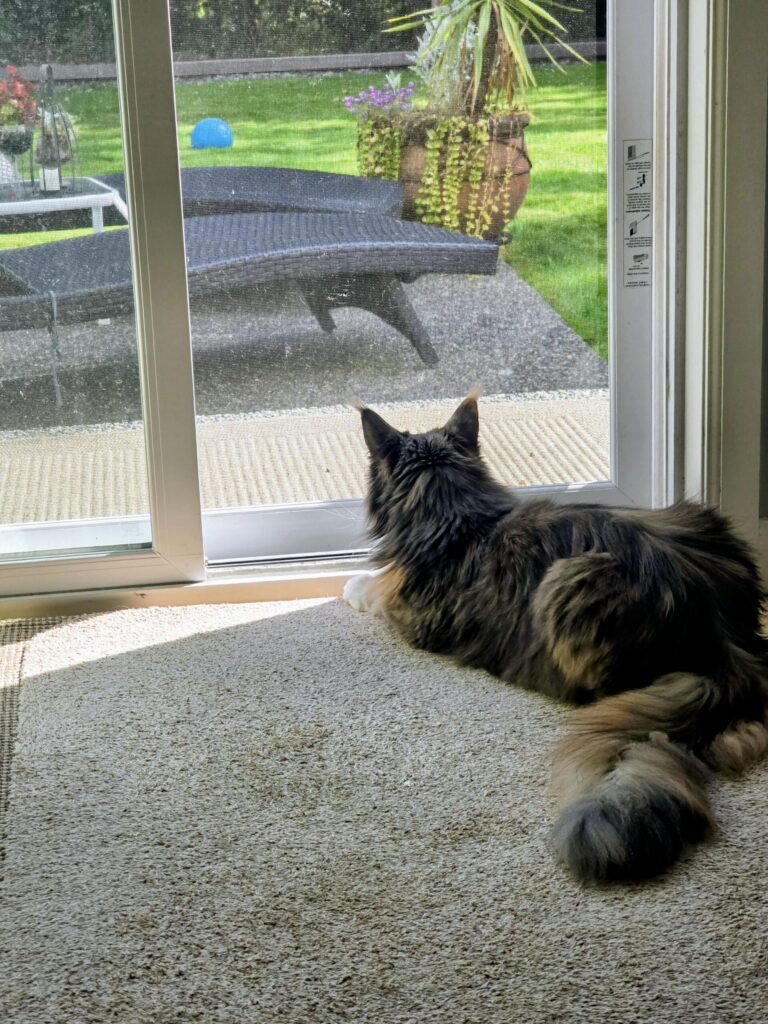
There’s no muddy paws moment, no obvious signal that something has shifted. It builds gradually, in small ways you start to notice if you’re paying attention. A little more fur on the brush. A snag where there wasn’t one before. Luna and Penelope, both Maine Coons, settling into new spots as the light changes through the windows.
With Luna home for spring break and Penelope easing back into her rhythm, I started noticing those small shifts more closely. Not just the shedding, but the texture of their coats. The way a brush would catch slightly more than it used to. The occasional tangle that needed more attention than a quick pass.
Nothing was wrong. But something was changing, and that’s usually the cue with cats. Not to overhaul everything, but to pay closer attention to what’s already happening. This is how I approach spring cat care in our home, and what’s actually helped as the season shifts.
This post covers what we actually do in our home during the spring transition and what’s worth knowing if you’re navigating the same season with your cats.
Why Cats Shed More in Spring
Shedding in spring is driven by daylight, not temperature.
As days get longer, the increase in natural light signals your cat’s body to release the heavier winter coat. This process is called photoperiod-driven shedding, and it happens whether your cat spends time outside or lives entirely indoors. Indoor cats often shed year-round at lower levels because artificial light disrupts the seasonal cycle slightly, but the spring increase is still noticeable for most.
For Luna and Penelope both, it shows up as a different quality of coat rather than just more fur. It loosens. It shifts. And with that, it tangles more easily than it did a few months ago.
Spring Shedding, Grooming, and the Knots That Come With It
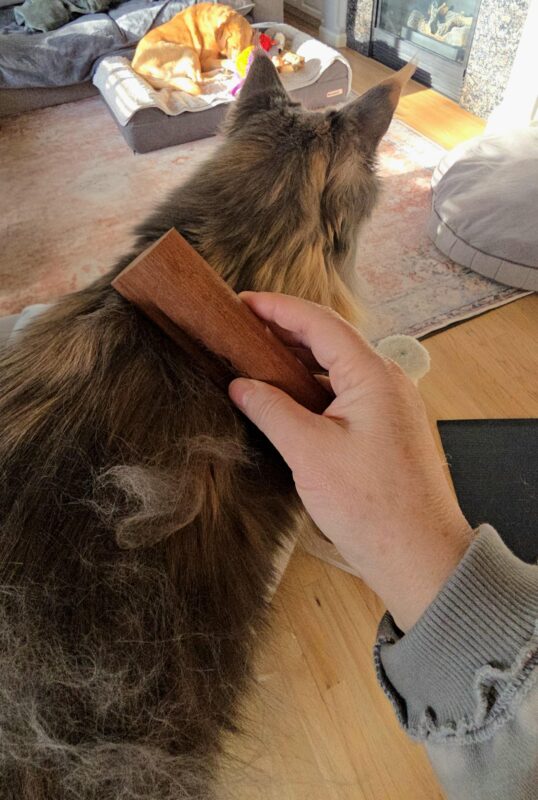
Spring shedding isn’t just more fur, it’s a different kind of coat to manage. This is where spring cat care becomes more hands-on, especially with grooming.
The biggest change I’ve noticed with both Luna and Penelope isn’t volume, it’s texture. Small knots and snags that weren’t there a few weeks ago are showing up in the usual spots. Under the legs, along the belly, behind the ears. Anywhere there’s regular movement and friction.
They don’t always brush out as easily as you’d expect either.
With Penelope especially, I’ve had to slow down during grooming sessions. She’s a Maine Coon, and that long silky coat behaves differently in spring than it does the rest of the year. The texture shifts, tangles form faster, and what worked in January needs more attention by April..
What used to be a quick pass now takes more intention. Sometimes that means working through a knot gently with a wide-tooth comb before going back in with a slicker brush. Sometimes it means trimming a small tangle rather than pulling at it and making it worse. I’ve also started keeping a small bottle of pet-safe detangler on hand for days when her coat feels especially dry or prone to catching. A light application before brushing makes a noticeable difference without weighing the coat down.
For Luna the shift is lighter. Fewer knots but more loose fur overall. Even a quick daily brush makes a real difference right now.
What’s worked best for both of them is more frequent, gentler grooming. Checking for snags instead of rushing through. And letting go of the idea that every knot needs to be resolved in a single session. Consistent and calm works better than thorough and stressful, for them and for you.
Hairballs tend to follow this pattern too. More loose fur means more self-grooming, which naturally leads to a slight increase. Regular brushing is the simplest way to stay ahead of it.
How the Home Environment Shifts in Spring
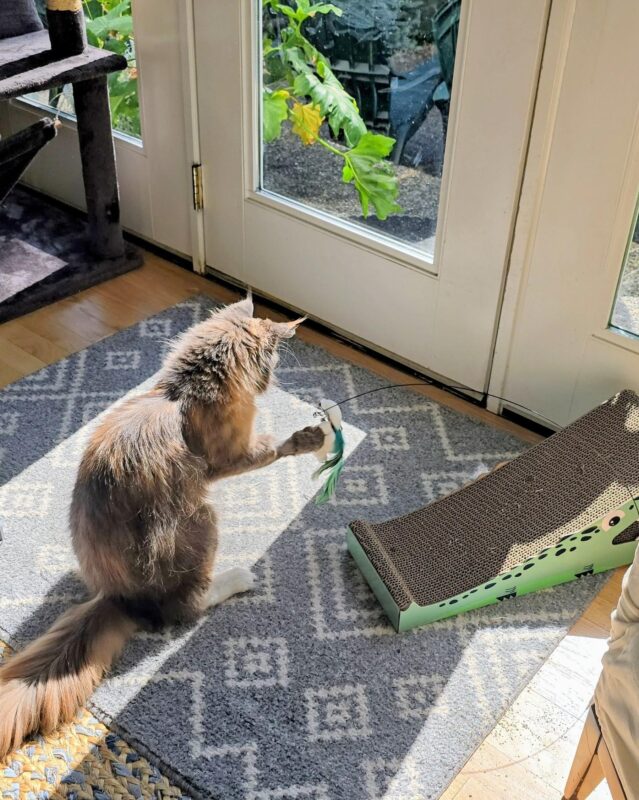
Spring doesn’t just change your cat’s coat. It changes the space around them.
Windows open more often. Air moves differently through the house. Light settles in new places throughout the day. And with that the environment becomes more active in ways cats pick up on immediately.
Luna notices everything. A bug near the window, movement in the yard, a new scent carried in through the screen. Her alertness increases noticeably this time of year. Penelope is more selective about what earns her attention, but she notices too, in her own quieter way.
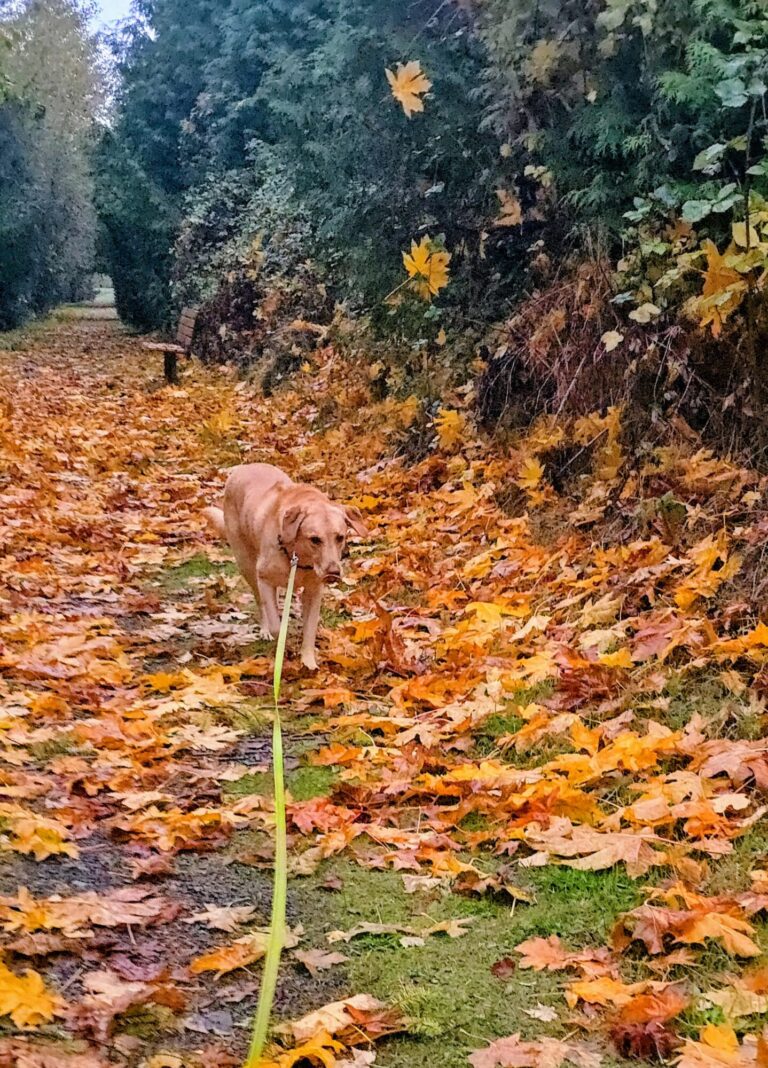
For cats who go outside occasionally, even on a leash like Luna and Penelope do, spring also marks the return of fleas, ticks, and other seasonal pests. It’s not something to worry over, just something to be aware of as time outside increases.
At the same time, the indoor environment matters more than it seems. As everything outside becomes more active, having a space inside that still feels steady makes a difference.
If you haven’t already thought through how your home is set up to support your cat’s indoor environment as the season shifts, our Cat Sanctuaries at Home post walks through how to create spaces that feel calm and predictable, even as the season shifts.
Making sure windows have secure screens, keeping outdoor time intentional, and maintaining quiet spaces your cat can retreat to are simple ways to support that transition without overcomplicating it.
Simple Spring Habits That Actually Hold

Spring cat care doesn’t require a full reset. It asks for small adjustments you can actually maintain.
Brush more often but keep sessions gentle. A few extra passes a few times a week, especially in the spots where knots tend to form, is more effective than one long session that stresses your cat out. For longer-haired cats a wide-tooth comb followed by a slicker brush tends to work better than starting with the brush directly on a coat that’s in transition.
Notice coat changes early. Catching a snag before it tightens into a knot saves a lot of effort later and keeps grooming from becoming something your cat starts to dread.
Keep litter areas especially clean and dry. With more shedding happening, this makes a difference faster than you might expect.
Let your cat lead on space. As the light shifts they’ll naturally move with it. Following their lead rather than trying to redirect them is one of the simpler ways to reduce friction this time of year.
Hold onto your routines even when the environment is changing around them. Feeding times, quiet time, and familiar rhythms matter more when everything else feels a little more active. If you’ve ever noticed how much these small patterns shape your connection, I wrote more about that in A Ritual of Care: 5 Daily Routines That Strengthen the Bond With Your Pet.
And if you’re doing any spring cleaning this season, it’s worth making sure the products you’re using are safe for cats. Our pet-safe spring-cleaning post covers what to watch for at home.
Spring Asks Less of You Than You Think
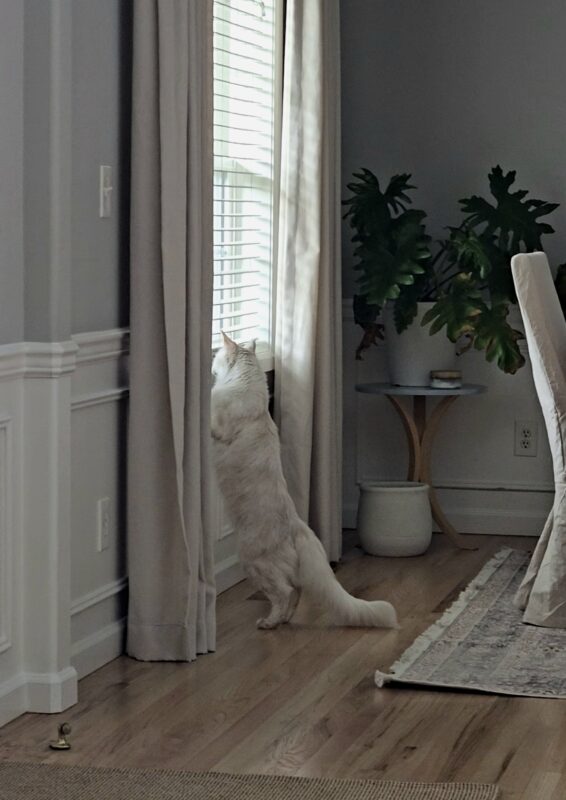
Most of what you’ll see this time of year is normal. More shedding, more grooming, the occasional hairball. It can look like something needs fixing when really it’s just moving through its season.
That said, a few things are worth slowing down for. Grooming that becomes constant or focused on a single area. Visible skin irritation or sensitivity during brushing. Knots that tighten quickly or seem uncomfortable when touched. Changes in behavior that don’t settle back into routine after a few days.
Those are signals to look a little closer, and if anything feels off, your vet is always the right call.
Outside of that, your cat is already adjusting. Quietly, instinctively, and usually more smoothly than we expect. Our role is to notice what’s changing, support it in simple ways, and step in only when something genuinely feels off.
Frequently Asked Questions
Why do cats shed more in spring?
Spring shedding is triggered by increased daylight, not temperature. Longer days signal your cat’s body to release the heavier winter coat. Even indoor cats experience this shift, though it may be less dramatic than in cats who spend time outside.
How often should I brush my cat during spring?
A few times a week is a good baseline for most cats. Long-haired cats like Maine Coons may benefit from daily gentle brushing during peak shedding, especially to stay ahead of knots and tangles that form more easily this time of year.
Why is my cat grooming more than usual in spring?
Increased grooming is a natural response to more loose fur in the coat. Cats are managing the shedding the way they’re built to. Regular brushing helps reduce how much they’re ingesting and keeps the coat from tangling.
Are hairballs more common in spring?
They can be, particularly as shedding increases and cats groom more frequently. Consistent brushing is the most effective way to reduce buildup. If hairballs become very frequent or your cat seems uncomfortable, it’s worth mentioning to your vet.
What helps with spring cat grooming at home?
A wide-tooth comb for working through tangles gently, a slicker brush for finishing, and a light pet-safe detangler for days when the coat is especially dry or prone to catching are the tools that have made the biggest difference in our home. Short, calm sessions a few times a week tend to work better than less frequent longer ones.
Should I be concerned about fleas and ticks in spring?
If your cat spends any time outside, even occasionally, spring is when flea and tick activity picks back up. Talk to your vet about prevention options that fit your cat’s lifestyle and your preference for natural versus conventional approaches.
How do I know if my cat’s shedding is normal?
Increased shedding in spring is expected. Signs that warrant closer attention include bald patches, skin irritation, excessive scratching, or grooming focused on one specific area. If the coat looks uneven or your cat seems uncomfortable during brushing, a vet visit is a good next step.
Do indoor cats shed more in spring?
Yes, many indoor cats still shed more in spring, even if they live inside full time. Longer daylight hours help trigger the seasonal coat cycle, though indoor lighting can make shedding feel a little less dramatic or more spread out across the year.
At Joyfolk Pets, we believe wellness begins in the everyday moments we share with our animals. Rooted in nature. Made with heart.