Fall Cat Care for Indoor Cats: What Changes This Season
Fall cat care for indoor cats can be easy to overlook.
Those are some of the things I watch for with Boomer on our fall walks, but indoor cats experience the changing season differently.
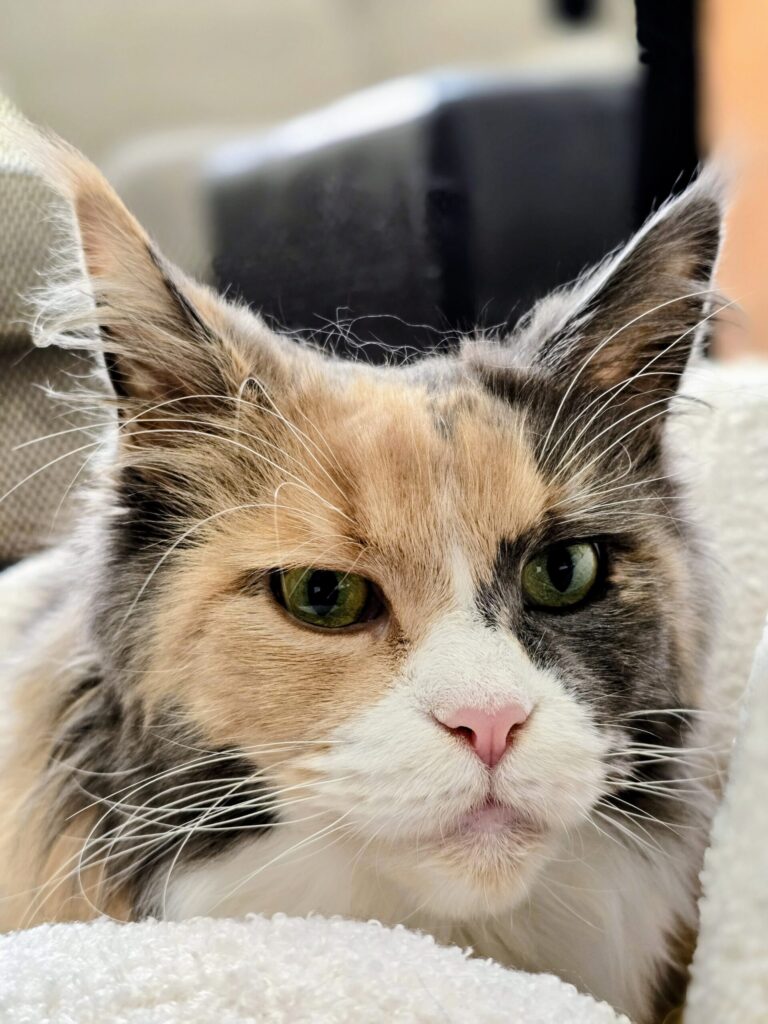
I’m starting to see that with Penelope.
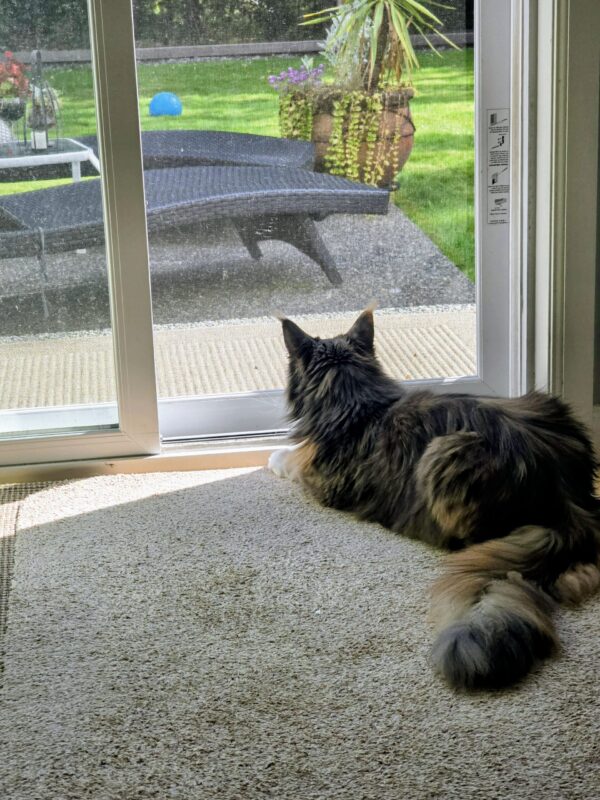
We’re still having some beautiful days here in the Seattle area, and she wants every bit of fresh air she can get. On warmer afternoons, I leave the slider open with the screen closed, and she’ll sit beside it watching and listening to whatever is happening outside. If I go out to water plants, she’s usually waiting at the door hoping I’ll let her into her catio, where birds and squirrels provide most of the entertainment.
At the same time, she’s starting to seek out warmer places inside. She’s curling up in bed more often, finding sunny spots, and shedding just enough to remind me that a fluffier coat probably isn’t far behind.
Even dinner seems to be shifting. Penelope has started asking for it a little earlier. My son recently told me Luna is doing the same thing at his place. Her usual 6 p.m. dinner apparently needs to happen closer to 5 now, according to Luna.
Those are small changes, but they’re a good reminder that fall cat care isn’t only about keeping outdoor cats warm. Shorter days, seasonal shedding, favorite sleeping spots, catio time, and even the candles and plants we bring into our homes can affect indoor cats, too.
Here’s what I’m paying attention to as we move into fall.
Shorter Fall Days Can Affect Your Cat’s Daily Routine
If your cat suddenly seems convinced that dinner should happen earlier, you may not be imagining the change.
Cats are naturally most active around dawn and dusk, and there is evidence that changing daylight can influence the daily rhythms of indoor cats. A 2022 study published in the Journal of Veterinary Behavior followed six indoor cats exposed to natural daylight throughout the year. Researchers found seasonal differences in the cats’ activity and feeding patterns, although activity changed more noticeably than eating patterns. Human interaction also played a role.
It’s a small study, so I wouldn’t use it to conclude that shorter fall days are the reason Penelope and Luna have started asking for dinner earlier. Our own schedules change this time of year, too. When darkness comes earlier, I feel ready to wind down earlier, and the whole rhythm of the house shifts along with it.
For Penelope, an earlier request for dinner is something I’ve noticed, not something I’m changing her schedule to accommodate. What matters more is knowing the difference between a small shift in routine and a meaningful change in behavior.
When to check with your vet:
A significant increase or decrease in appetite, unusual lethargy, increased hiding, or changes in litter box habits shouldn’t automatically be attributed to the season. If you notice a meaningful change from your cat’s normal behavior, check with your veterinarian.
Indoor Cats May Still Shed More in the Fall
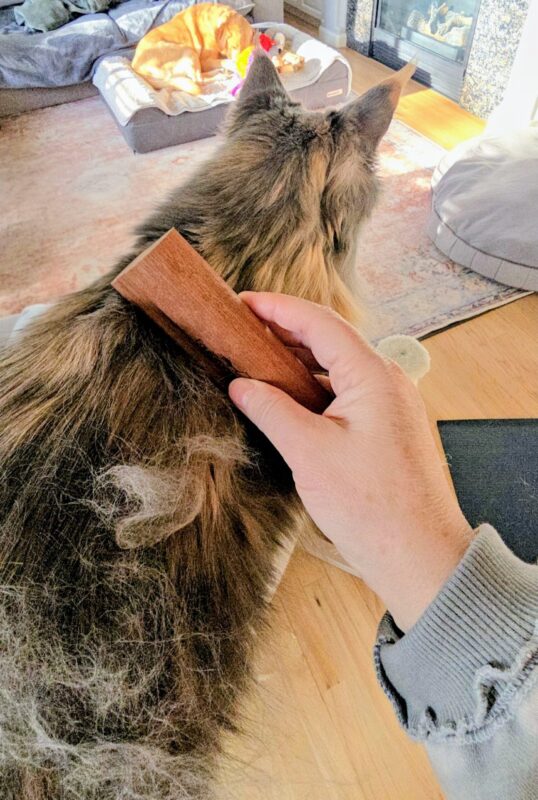
Penelope is a Maine Coon, so fur isn’t exactly a seasonal occurrence in our house, but her coat still changes with the season. She’s beginning to shed a little more now, and last year I noticed she became noticeably fluffier as we moved toward winter.
According to the American Animal Hospital Association (AAHA), many cats shed more in the spring and fall as their coats adjust to seasonal changes. For indoor cats, that cycle can be less obvious. Artificial light and steady indoor temperatures may mean they shed more consistently throughout the year rather than having one dramatic fall shed.
For long-haired cats especially, fall is a good time to stay ahead of brushing before loose undercoat turns into tangles or mats. It’s also a good time to notice the skin underneath. Bald patches, irritated skin, or a sudden dramatic increase in shedding aren’t something I’d assume is just seasonal.
I go much deeper into brushing, shedding, and mats in Spring Cat Care: Shedding, Grooming, and Small Signs Worth Noticing, so I won’t repeat it all here. In fall, I’m mostly watching for the start of that seasonal coat change and adjusting how often I brush Penelope as needed.
Cooler Weather Can Change Where Your Indoor Cat Sleeps
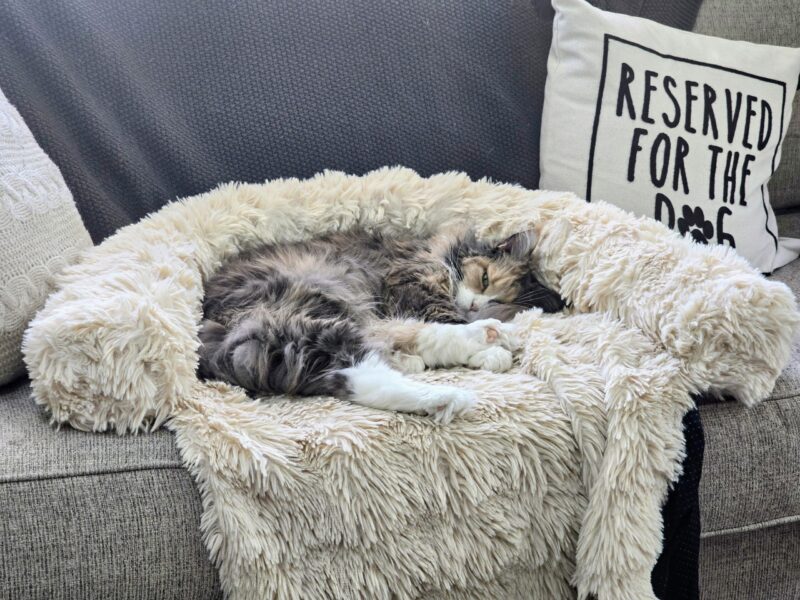
One of the first fall changes I notice with Penelope is where she chooses to sleep.
As mornings get cooler, she starts choosing the bed more often and seeking out sunny spots around the house. Places that held no interest for her all summer suddenly become prime real estate.
A sunny window, a drafty floor, or a bed near a heating vent can feel very different to a cat even when the thermostat hasn’t moved much.
I mostly watch where Penelope settles and make sure the spots she already likes are still comfortable as the house cools down. That might mean moving a bed away from a draft, bringing a favorite blanket back out, or adding another warm option near a window that’s started to feel cold against the glass.
If your cat suddenly stops using a favorite sleeping spot, it’s worth checking whether something about the spot has changed before assuming they’ve simply lost interest in it.
Less Catio and Open-Window Time Means Less Outdoor Stimulation
For an indoor cat who loves an open window or a screened porch, fall changes more than the temperature. It changes what there is to watch, smell, and listen to.
Right now, I’m still taking advantage of warm afternoons with Penelope. I’ll open the slider but leave the screen closed, and she’ll sit there as long as she wants, watching whatever’s moving in the yard. When I’m outside, she usually wants into her catio, where she mostly sits and watches. Birds and squirrels do most of the entertaining.
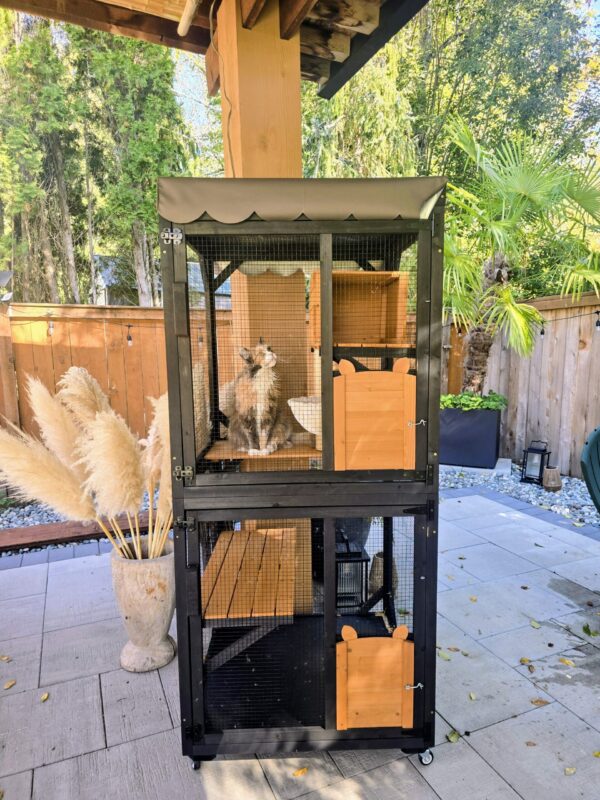
As fall moves along here in the Pacific Northwest, those afternoons get harder to come by. The rain returns, the slider stays closed more often, and catio time shrinks. That also means less of the outdoor stimulation she’s used to getting.
On those days, I might rotate in a few toys she hasn’t seen in a while, leave out a cardboard box, or give her a short play session. It gives her something else to do on days when the slider stays closed.
Fall Candles and Essential Oils Can Pose Risks for Cats
This is one of the bigger changes I’ve made in my own fall routine.
I love fall candles, and I still use them occasionally, but far less and with more discernment on the type of candle than I once did, mostly because I know more now about what I’m bringing into a house shared with a cat.
The obvious risk is an open flame around a curious animal. Cornell’s Feline Health Center includes burning candles and potpourri containers among household hazards for cats because of the potential for burns or for a cat to knock one over. Battery-operated candles can give you the same kind of glow without an open flame.
Fragrance is worth a second thought too, especially with essential oils. According to Pet Poison Helpline, cats can be particularly sensitive to essential oils, and exposure can happen through ingestion or skin contact. Active diffusers add another concern because tiny oil droplets can land on a cat’s coat and later be swallowed during grooming. Several oils common in fall and holiday scents, including cinnamon, clove, pine, and peppermint, are among those known to cause poisoning in cats.
I’ve written more about this in Are Essential Oils Safe for Cats? What to Avoid and What Actually Matters at Home, because “natural” doesn’t automatically mean safe around a cat, and fall is a good time to revisit it before the diffusers and potpourri come back out.
Some Popular Fall Plants Are Toxic to Cats

Fall doesn’t just change what’s happening outside. It changes what we bring inside.
Mums are everywhere this time of year, and unfortunately, chrysanthemums are toxic to cats. According to the ASPCA Animal Poison Control Center, ingestion can cause vomiting, diarrhea, excessive drooling, loss of coordination, and skin irritation.
Autumn crocus is a more serious concern, and it’s a different plant from the crocus that blooms in spring. The ASPCA warns that Colchicum autumnale can be extremely toxic to cats and dogs, with effects that can include severe gastrointestinal illness, organ damage, bone marrow suppression, and death.
Pumpkins and corn, on the other hand, are considered non-toxic to cats and dogs according to the ASPCA, although eating a large amount of plant material can still cause digestive upset.
I don’t try to memorize every seasonal plant that could be a problem. I check before bringing something new into the house, especially this time of year when plants and other natural decorations start showing up on porches, tables, and in seasonal displays.
Fall Cat Care for Indoor Cats Starts at Home
The change of season is also a good reminder to look at things around the house that I might otherwise stop noticing.
In fall, blankets come back out, windows stay closed more often, the heat eventually comes on, and both of us end up spending more time inside. I use the transition as a small reset. I wash Penelope’s bedding, vacuum the places where loose fur collects, and check that the spots where she spends most of her time are still comfortable as the house gets cooler.
Those spaces don’t have to be elaborate. In Cat Sanctuaries at Home: Indoor Feline Paradise Design, I wrote about creating places where an indoor cat can sleep, scratch, play, hide, and watch what’s going on around her. Fall is a good time to take another look at those spaces and make sure they still work as your cat starts spending more time indoors.
I also pay attention to what’s newly entering Penelope’s environment, whether that’s a candle, a seasonal plant, or a new blanket.
That’s really the part of fall cat care that matters most to me. I know where Penelope usually sleeps, when she expects dinner, how her coat normally feels, and how much time she likes to spend watching the yard. Knowing her normal makes it easier to notice when something actually changes.
Right now, fall looks pretty ordinary in our house. Dinner is a little earlier, there’s a bit more fluff, Penelope is drifting toward warmer spots, and she’s still trying to get every last good afternoon beside the open slider.
For an indoor cat, those small changes may be some of the clearest signs the season has turned at all.
Fall Cat Care FAQs
Do indoor cats notice when the seasons change?
Yes. Indoor cats are still exposed to changes in natural daylight, and research suggests seasonal daylight can influence their activity and daily rhythms. Individual cats may respond differently, even when they spend all of their time indoors.
Do indoor cats shed more in the fall?
Some do. Seasonal coat changes can lead to increased shedding in fall, although artificial light and steady indoor temperatures may make the seasonal cycle less noticeable. Some indoor cats shed fairly consistently throughout the year.
Why does my cat want to eat earlier in the fall?
There isn’t enough evidence to say that shorter fall days directly make cats want dinner earlier. Changes in daylight, activity, household schedules, and routines may all play a role. A significant change in appetite, especially with other behavioral or physical changes, is worth discussing with your veterinarian.
Are mums toxic to cats?
Yes. Chrysanthemums, commonly sold as mums in fall, are toxic to cats. Ingestion can cause vomiting, diarrhea, drooling, loss of coordination, and skin irritation.
Are pumpkins and other fall decorations safe for cats?
Plain pumpkins are considered non-toxic to cats, although eating a large amount of plant material can still cause digestive upset. Other fall plants and decorations may not be safe, so check individual plants and keep candles, ribbons, and small chewable decorations out of reach.
Are fall candles and essential oil diffusers safe around cats?
Lit candles can pose burn and fire risks around cats. Essential oils require additional caution because cats can be particularly sensitive to certain oils, and exposure can occur through ingestion or skin contact. Active diffusers can also leave tiny oil droplets on a cat’s coat that may later be swallowed during grooming.
At Joyfolk Pets, we believe wellness begins in the everyday moments we share with our animals.
Rooted in nature. Made with heart.