Fall Dog Safety: What to Watch for on Walks and Trails
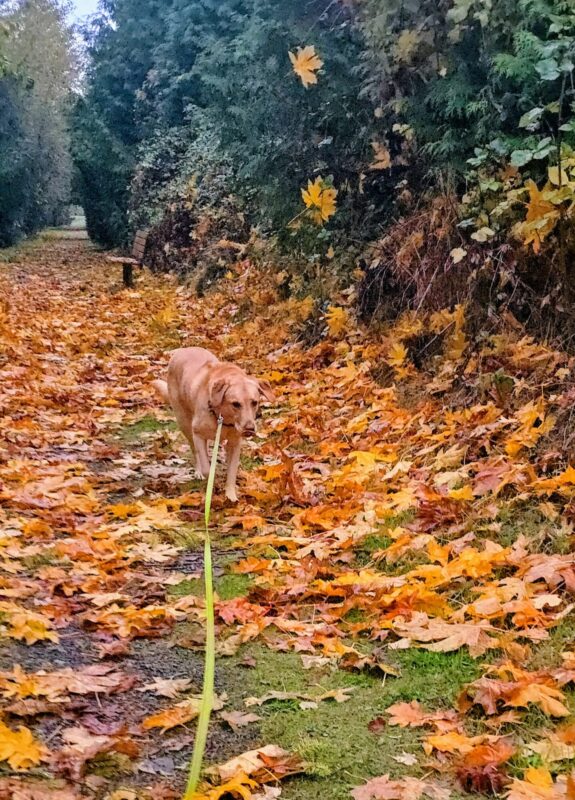
Fall dog safety starts to look a little different around here every September, when I realize our walks have changed.
The mornings are cooler. Leaves start collecting along the trail, and after the first stretches of rain, mushrooms seem to pop up everywhere overnight.
Boomer notices all of this too, although usually for different reasons.
He’s a Lab, which means I spend a fair amount of every walk watching what he’s sniffing and, more importantly, what he might be considering eating. Over the past six years, he’s landed us at the vet more than once after swallowing something he shouldn’t have. Those visits were expensive. They were also scary.
So while I love walking with Boomer in the fall, it’s also the season when I start paying closer attention to what’s changing around us. Pine cones, nuts, seeds and other debris collect on the ground. Rain changes familiar trails and creates puddles that are awfully tempting to a thirsty dog. Storms can leave branches and other debris behind, and as the season moves along, there’s less daylight to work with too.
Fall doesn’t mean dogs need to stay inside. Quite the opposite. It’s one of my favorite times of year to get outside with Boomer.
But the same trail you walked all summer can be a different place in October.
Fall Dog Safety Around Wild Mushrooms
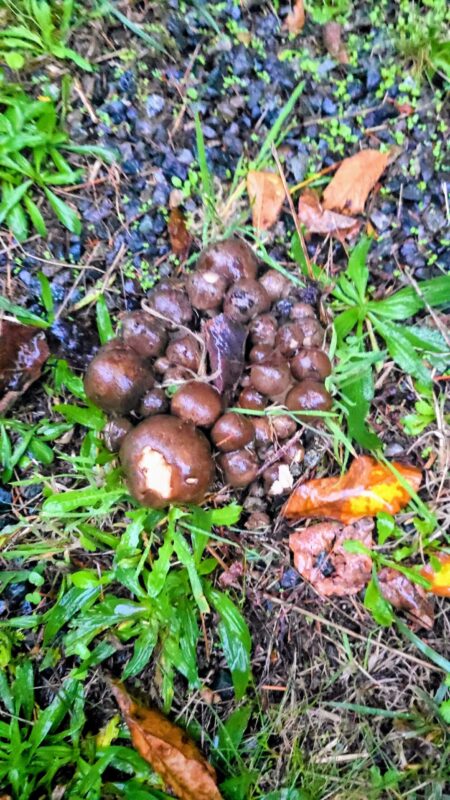
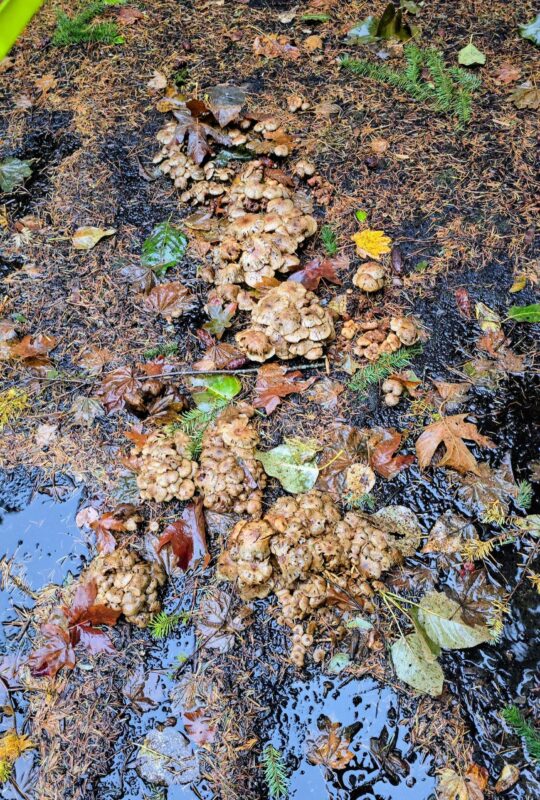
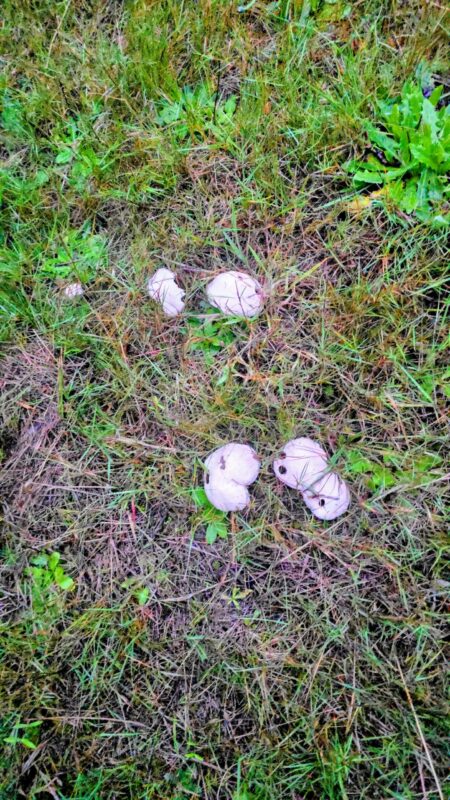


This is the fall change I’m noticing most right now.
On our recent walks, mushrooms are suddenly everywhere. They’re along the edges of trails, growing in damp patches and popping up in places that were bare not long ago.
For a dog who isn’t particularly interested in eating things off the ground, that may not require much more than awareness. Boomer is not that dog.
Wild mushrooms can be difficult to identify, and some toxic species can make dogs seriously ill. The ASPCA’s mushroom safety guidance explains that even experts can have difficulty identifying some mushrooms and recommends supervising dogs outside and on walks and hikes where mushrooms may be growing.
That makes my rule with Boomer pretty simple. Wild mushrooms are off-limits.
I keep him close when we pass clusters of them and pay particular attention when he suddenly becomes very interested in one spot. Sometimes he knows something interesting is there before I do.
Fall Puts a Lot More on the Ground
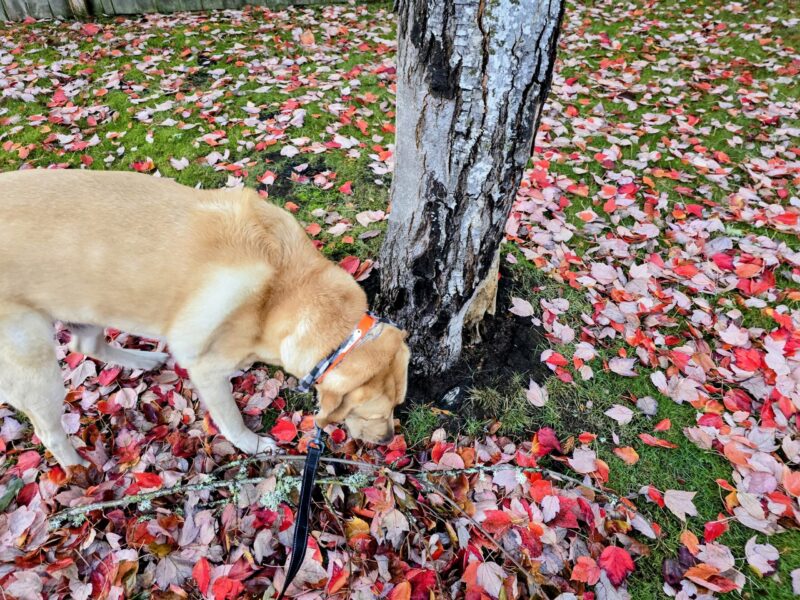
Mushrooms aren’t the only new attraction.
Depending on where you live and walk, fall can cover the ground with pinecones, nuts, seeds, berries, fallen fruit, sticks and all kinds of plant material. Add whatever other people have dropped along the trail, and there can be plenty for a curious dog to investigate.
Not everything on the ground is poisonous, of course. The bigger issue for me is that I don’t necessarily know what Boomer has found.
And “What are you eating?” is not a question I like asking after the fact.
I pay more attention in areas where things are falling from trees, around picnic areas and trailheads, and anywhere Boomer suddenly stops for an unusually intense sniff.
This is also where knowing your own dog matters. Some dogs walk past a pine cone without a second glance. Others carry sticks. Others investigate every berry.
And some Labs apparently believe it is their responsibility to determine whether every object in the forest is edible.
I have one of those.
Wet Leaves Can Hide What’s Underneath
A trail covered in fall leaves is beautiful. It can also hide quite a bit.
Once leaves start piling up, it becomes harder to see mushrooms, sticks, rocks, holes, mud and other debris underneath them. After enough rain, parts of a familiar trail can also become slick when they weren’t a few weeks earlier.
That’s something I pay more attention to if we’re going farther out on a trail. A longer fall hike with your dog can look quite different from the same hike in summer, especially after several wet days.
Fall storms can change things quickly too. Wind and heavy rain can bring down branches or entire trees, wash debris across a trail and make already wet ground less stable. A trail I know well isn’t necessarily going to look exactly the way it did the last time we were there.
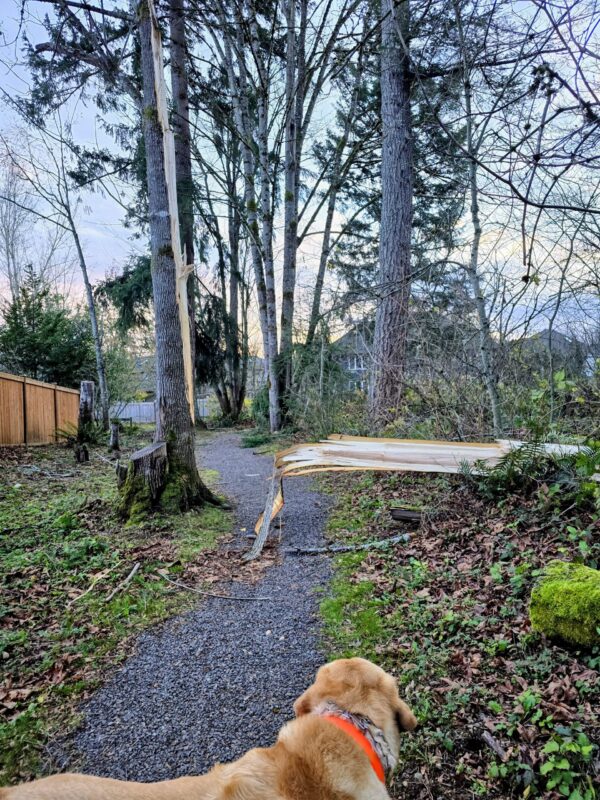
After a storm, I’m a little more cautious about what might be ahead. Sometimes the right choice is simply turning around rather than trying to get Boomer past or around something that has fallen across the trail. It can also be worth checking current trail conditions before heading out, especially after a significant storm.
I notice the leaves most when Boomer wants to wander toward the side of the trail and start sniffing through a pile. I can’t always see what he’s putting his nose into.
That doesn’t mean I keep him away from every leaf pile. Sniffing is part of the walk. I just keep a closer eye on what he’s investigating and on where we’re both stepping.
Fall Rain Brings More Water
Rain also means puddles, fuller creeks and more standing water.
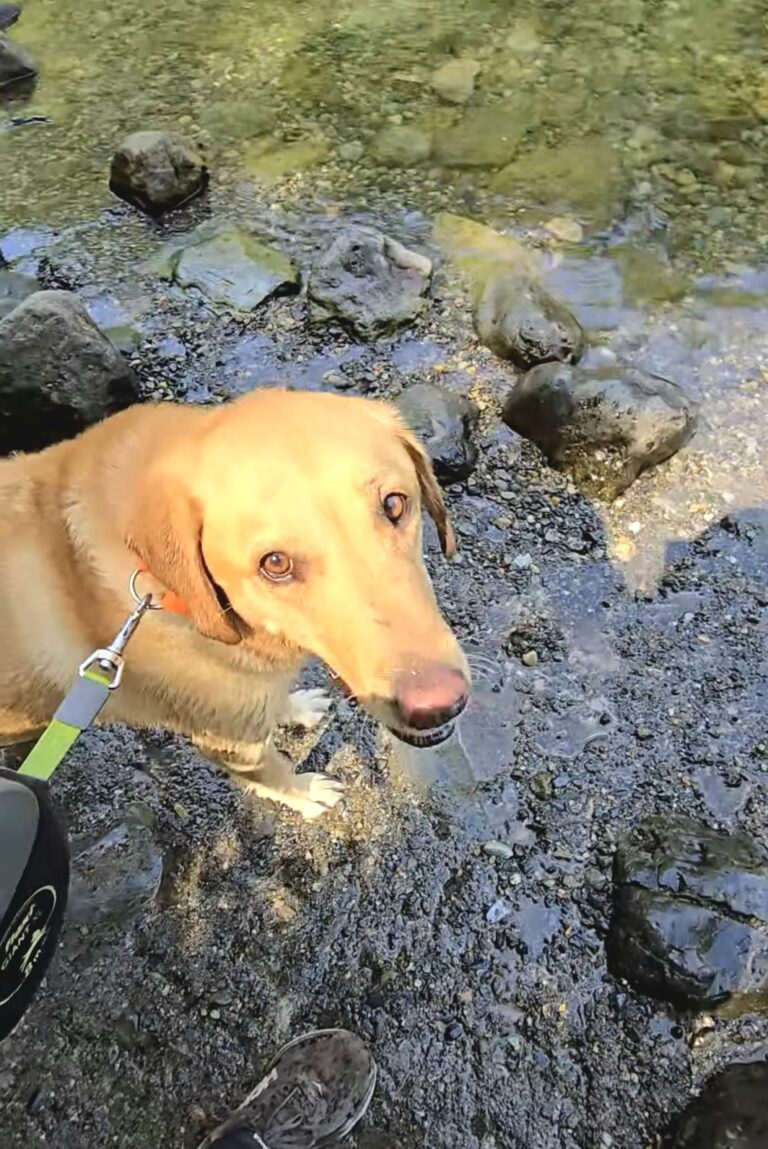
Boomer would happily drink from many of these sources if I let him. I don’t.
One of the reasons is Giardia. According to the CDC’s guidance on Giardia and pets, dogs can become infected by drinking from a contaminated creek, pond or other water source. Giardia can also survive for several months in cold water or soil and lasts longer in cool, moist environments than it does in dry, warm ones.
That makes it relevant well beyond summer.
I’ve written more about Giardia and outdoor water in Can Dogs Drink From Creeks or Puddles Safely?.
If your dog is another enthusiastic outdoor-water drinker, bringing clean water along is much easier than trying to convince a thirsty dog that the muddy puddle in front of him is a bad idea.
Wildlife May Be More Noticeable on Fall Walks
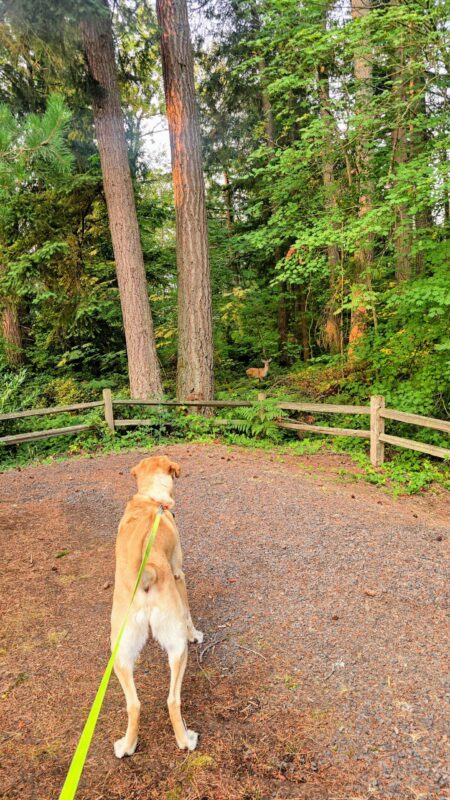
One reason I love walking in the woods is that we’re sharing them with wildlife.
It also means I want to know what’s around us before Boomer does.
Wildlife activity and behavior change throughout the year. What that looks like in fall depends on where you live and what animals share the places where you walk. For me, the important part isn’t treating every wildlife encounter as dangerous. It’s knowing what may be around us and giving wild animals space when we see them.
A leash makes that much easier. It keeps Boomer from turning an interesting sighting into a chase, and it gives wildlife room to move away from us.
Some trails and protected areas also have rules intended to protect wildlife, so it’s worth checking the rules before heading somewhere new.
In What to Do If You See Wildlife While Hiking With Your Dog, I’ve written more about what I do when Boomer and I are walking in areas where we may encounter wildlife, including how I think about leash safety and giving animals space.
The goal isn’t to be afraid of what’s in the woods. It’s to remember that we’re visitors there too.
Walking Your Dog in Cooler Weather and Lower Light
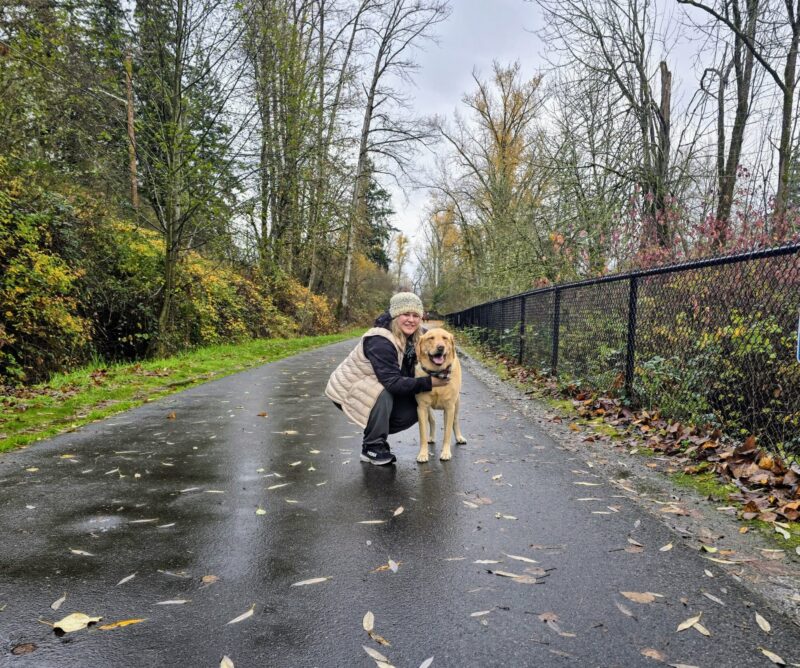
This one always seems to happen faster than I expect.
I usually walk Boomer in the morning, and as fall moves along, those mornings get darker and colder. If we do head out in the evening, daylight disappears earlier then too. A walk that was comfortably bright and warm all summer can feel very different a few weeks later.
I start paying more attention to what I’m wearing too. On a neighborhood walk that may not matter much, but if Boomer and I are heading farther out on a trail, I want enough layers for the temperature and weather we’re likely to encounter. Fall mornings can start chilly, warm up as we walk and change again if the weather moves in.
Visibility is the other piece. Drivers, cyclists and other people need to be able to see us, but I also want to be able to see what’s on the ground ahead of Boomer. That becomes more important when I’m already watching for mushrooms, fallen debris and whatever else he might find interesting.
Reflective or lighted gear can help make a dog easier to see. I also like having enough light to see the path in front of us rather than discovering what’s there at the same time Boomer does.
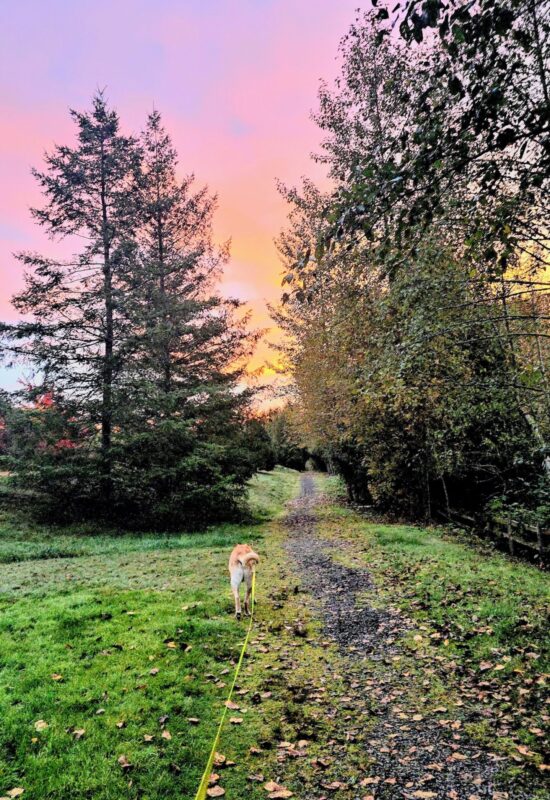
Timing matters more on trails too. A route that’s easy to follow in daylight can feel very different when the light starts disappearing.
None of that keeps us from going out. It just changes what I think about before we leave.
Tick Season Doesn’t Necessarily End With Summer
Ticks are easy to associate with warm summer hikes, but cooler weather doesn’t automatically mean they’re gone.
Tick activity varies by species, geography and weather, so cooler temperatures don’t necessarily mean they’re gone. The Companion Animal Parasite Council recommends year-round tick prevention for dogs.
For Boomer, I don’t treat the first cool morning as a signal that I can stop paying attention.
We continue the parasite prevention recommended by his veterinarian. If we’ve walked through brush, tall grass or wooded areas, I also give him a quick check when we get home.
It isn’t an elaborate process. I feel through his coat and pay attention around his ears, neck, legs and paws. If we’ve been somewhere wet or muddy, I check between his toes for anything that hitched a ride and dry him off if he needs it.
And yes, the dog towel by the door makes its seasonal comeback.
If you’ve read my Spring Dog Care routine, you know this isn’t a complicated process in our house. The goal is to catch the little things before they become bigger ones and keep most of the trail from traveling through the rest of the house with Boomer.
If you’re unsure how long your dog needs flea and tick prevention where you live, that’s something to talk through with your veterinarian rather than deciding based on the weather.
Fall Walks Are Still Some of the Best Walks
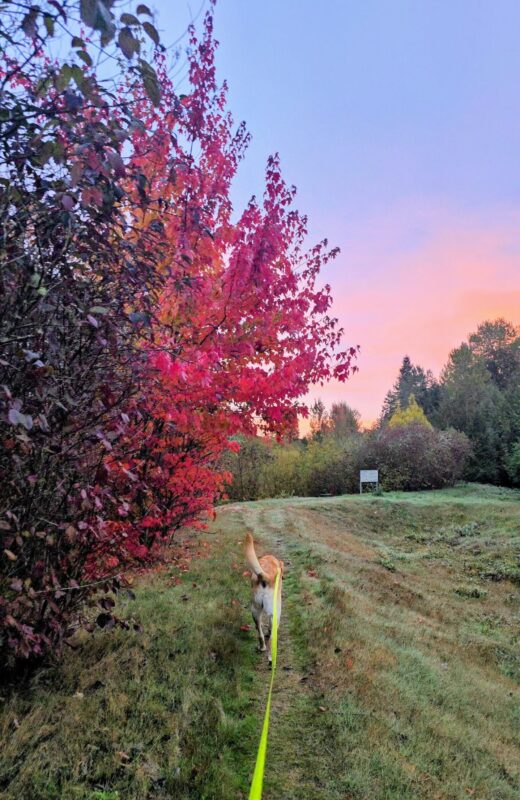
There is a lot to watch for in fall, but I don’t want a list of seasonal hazards to make this season sound scary.
Some of my favorite walks with Boomer happen this time of year. The air is cooler. The woods start changing. The trails look different from one week to the next. Even the sudden appearance of mushrooms everywhere is fascinating, as long as Boomer admires them with his eyes rather than his stomach.
Having a dog who has gotten himself into trouble by eating things has probably made me more observant than I would otherwise be. I’m always scanning a little ahead of him, noticing what’s changed and trying to spot the thing he’ll find interesting before he gets there.
Most of the time, nothing happens.
We walk. Boomer sniffs. I tell him to leave something alone. He finds something else to sniff.
And we keep going.
That’s really what fall dog safety looks like in our house. We aren’t avoiding the season. I’m simply paying a little more attention while we’re out enjoying it.
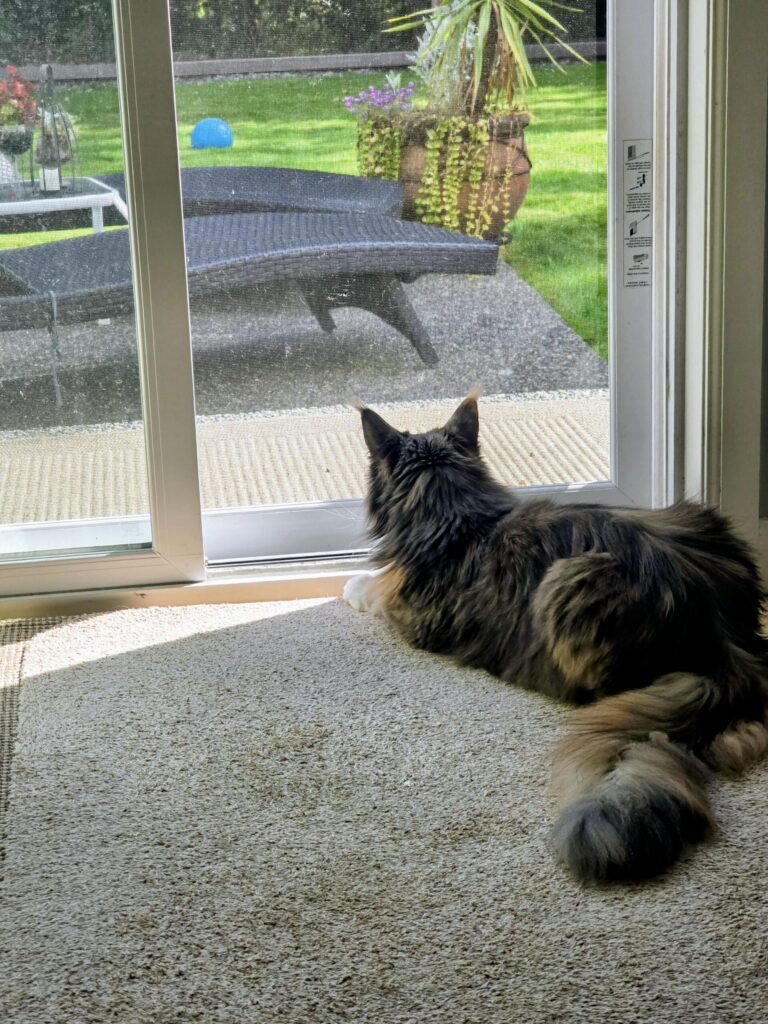
Fall looks a little different for Penelope. In Fall Cat Care for Indoor Cats: What Changes This Season, I look at the smaller seasonal shifts I notice with her, from shedding and sleeping spots to changing routines and what we bring into the house.
As fall eventually gives way to colder days, some of the things I think about with Boomer change again. I cover those colder-weather routines and considerations in my Winter Dog Wellness guide.
Fall Dog Safety FAQs
What are common fall hazards for dogs on walks?
Fall hazards vary depending on where you live, but they can include wild mushrooms, fallen plant material, wet or slippery trails, storm debris, shorter daylight hours, wildlife, ticks and contaminated outdoor water. It also helps to know your own dog and what they’re likely to investigate or try to eat.
Are wild mushrooms dangerous to dogs?
Some wild mushrooms are toxic to dogs, and it can be difficult to tell toxic mushrooms from harmless ones. If your dog eats a wild mushroom, contact your veterinarian or ASPCA Poison Control promptly rather than waiting to see if symptoms develop.
Are ticks still active in the fall?
They can be. Tick activity varies by species, location and weather, so cooler temperatures don’t necessarily mean tick season is over. Talk with your veterinarian about the parasite prevention that makes sense for your dog and where you live.
How can I keep my dog safer on walks in low light?
Make sure other people can see you and your dog, and that you can see the path ahead. Reflective or lighted gear can improve visibility, while carrying a light can help you spot changes in the trail and things your dog might find on the ground.
Can dogs get sick from drinking puddles or other outdoor water?
Yes. Outdoor water can be contaminated with organisms that can make dogs sick, including Giardia. Dogs can become infected by drinking from a contaminated creek, pond or other water source. Bringing clean drinking water gives your dog a safer option when you’re out walking or hiking.
At Joyfolk Pets, we believe wellness begins in the everyday moments we share with our animals.
Rooted in nature. Made with heart.